




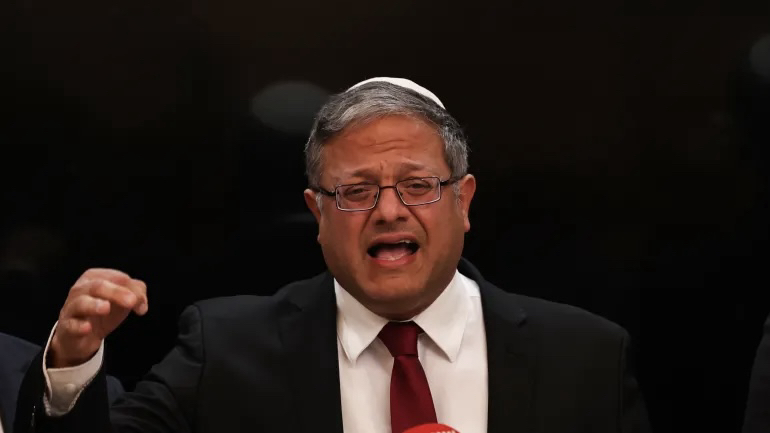
Israeli National Security Minister Itamar Ben-Gvir has drawn widespread condemnation after calling for a major escalation against Lebanon, declaring that “all of Lebanon must burn” following the deaths of four Israeli soldiers during fighting in southern Lebanon.
In a series of remarks, the far-right minister rejected international pressure for restraint and argued that Israel should respond with overwhelming force. Ben-Gvir said that for every Israeli family affected by the conflict, Lebanon should pay a far greater price, urging Israel to intensify its military campaign rather than pursue de-escalation.
His comments came as Israeli forces launched some of their heaviest attacks on southern Lebanon since a ceasefire understanding linked to the recent US-Iran agreement came into effect. Lebanese authorities reported dozens of casualties across the south and the Bekaa Valley, with homes and residential areas among the targets.
Ben-Gvir’s statements have further fuelled fears that hardline figures within the Israeli government are pushing for a broader conflict despite ongoing diplomatic efforts to halt hostilities.
Iranian Foreign Minister Abbas Araghchi strongly condemned the remarks, accusing Israel’s leadership of promoting endless warfare. Responding directly to Ben-Gvir, Araghchi said the comments reflected a dangerous mentality within the Israeli government and argued that Israel’s actions showed little interest in regional stability or peace.
He described Israel as pursuing a policy of “permanent war” and warned that continued escalation threatened not only Lebanon but the wider region. His response quickly became one of the strongest international reactions to Ben-Gvir’s comments and highlighted growing tensions surrounding efforts to implement the US-Iran memorandum of understanding.
Meanwhile, Lebanon’s Health Ministry said Israeli air strikes carried out from midnight into the afternoon killed at least 47 people and wounded 97 others. The deadliest attacks were reported in Harouf, al-Duweir and Haboush, while casualties were also recorded across numerous towns in southern Lebanon and the Bekaa Valley.
Lebanon’s National News Agency described the overnight bombardment of the Nabatieh district as one of the most intense assaults in recent months, with artillery shelling, drone strikes and air raids reported across multiple locations.
Israel confirmed carrying out the attacks, saying it was targeting Hezbollah fighters and infrastructure in response to what it described as repeated violations of ceasefire arrangements. The military indicated that operations could continue if it considered Hezbollah to be breaching the agreement.
Adding to calls for escalation, Israeli Finance Minister Bezalel Smotrich said it was time to “open the gates of hell” on Lebanon following the deaths of the Israeli soldiers.
The latest violence comes despite diplomatic efforts led by the United States, Qatar and Iran to secure a halt to fighting. Reports indicate that US President Donald Trump personally urged Israel to agree to a ceasefire with Hezbollah, while senior American officials have stressed that Lebanon is covered by the broader understanding reached between Washington and Tehran.
US officials had previously warned Israel against actions that could undermine the agreement, and reports suggested that Trump and Israeli Prime Minister Benjamin Netanyahu had held tense discussions over military operations in Lebanon.
Despite those efforts, Israeli strikes reportedly continued after the ceasefire deadline passed, raising questions about the durability of the arrangement and the prospects for wider regional de-escalation.
Further uncertainty emerged after Switzerland confirmed that planned US-Iran talks at the Burgenstock resort would no longer take place, following reports that US Vice President JD Vance had withdrawn from the meeting. The cancellation has cast doubt over the next phase of diplomatic efforts as fighting continues on the ground.