


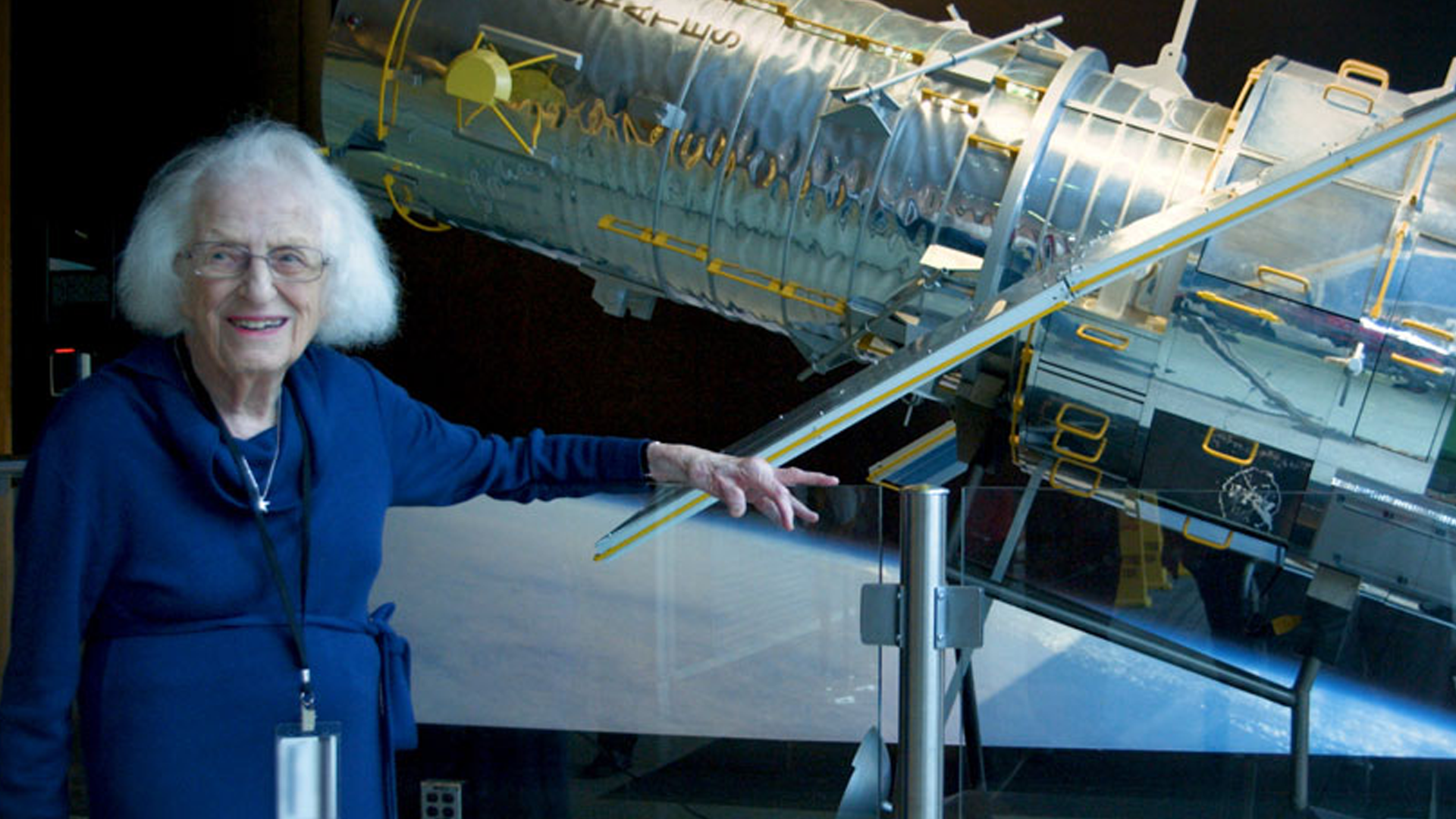
CAPE CANAVERAL, Fla. — NASA’s newest flagship observatory, the Nancy Grace Roman Space Telescope, successfully launched from the Kennedy Space Center, embarking on a high-stakes mission to uncover the secrets of dark energy and scout distant exoplanets across the Milky Way.
Blasting off shortly after daybreak, the spacecraft is now en route to Lagrange Point 2 (L2), a gravitational pocket about one million miles from Earth. From this strategic vantage point—the same orbital neighborhood occupied by the James Webb Space Telescope—Roman will give astronomers an unprecedented panoramic view of the universe.
A Wide-Angle View of the Universe
While the Hubble and James Webb space telescopes are famous for their deep, narrow-field “zoom lens” observations, the Roman Space Telescope is engineered for massive cosmic surveys. Equipped with a 300-megapixel Wide Field Instrument, its camera possesses a field of view 100 times larger than Hubble’s while matching its razor-sharp resolution.
Scientists expect the telescope to map billions of galaxies during its primary five-year mission, collecting more raw data in its first few months than Hubble gathered over three decades.
Decoding Dark Energy and Hunting Exoplanets
The mission focuses on two of astrophysics’ biggest mysteries:
- Dark Energy & Cosmic Expansion: By surveying thousands of distant supernovae and cataloging the large-scale structure of the universe, Roman aims to measure how dark energy—the mysterious force accelerating cosmic expansion—has behaved over cosmic history.
- Exoplanet Census: Utilizing a technique called gravitational microlensing, Roman will track subtle light distortions caused by planetary systems passing in front of background stars. This will allow astronomers to detect thousands of worlds, including rocky Earth-sized planets orbiting far from their host stars.
The spacecraft also carries a state-of-the-art Coronagraph Instrument, designed to block out the overwhelming glare of bright stars to directly image adjacent gas giants and circumstellar dust disks—testing technologies vital for future life-hunting space observatories.
Named in honor of Dr. Nancy Grace Roman, NASA’s first chief of astronomy and a key driver behind the Hubble Space Telescope, the mission marks a major milestone for international space exploration as scientists worldwide prepare for a flood of high-resolution deep-space data.