

El Niño is strengthening in the Pacific Ocean, with the Maldives Meteorological Service (MET) warning that the phenomenon could pose a threat to the survival of coral reefs in the Maldives.
According to MET, the latest observations show that sea surface temperatures in the eastern equatorial Pacific have risen more than 2.0°C above the average. The Niño 3.4 index, which stood at around 1.8°C in mid-August, has also continued to rise.
MET said unusually high sea surface temperatures are being recorded across other regions affected by El Niño, while current oceanic and atmospheric conditions indicate that its effects are already becoming evident.
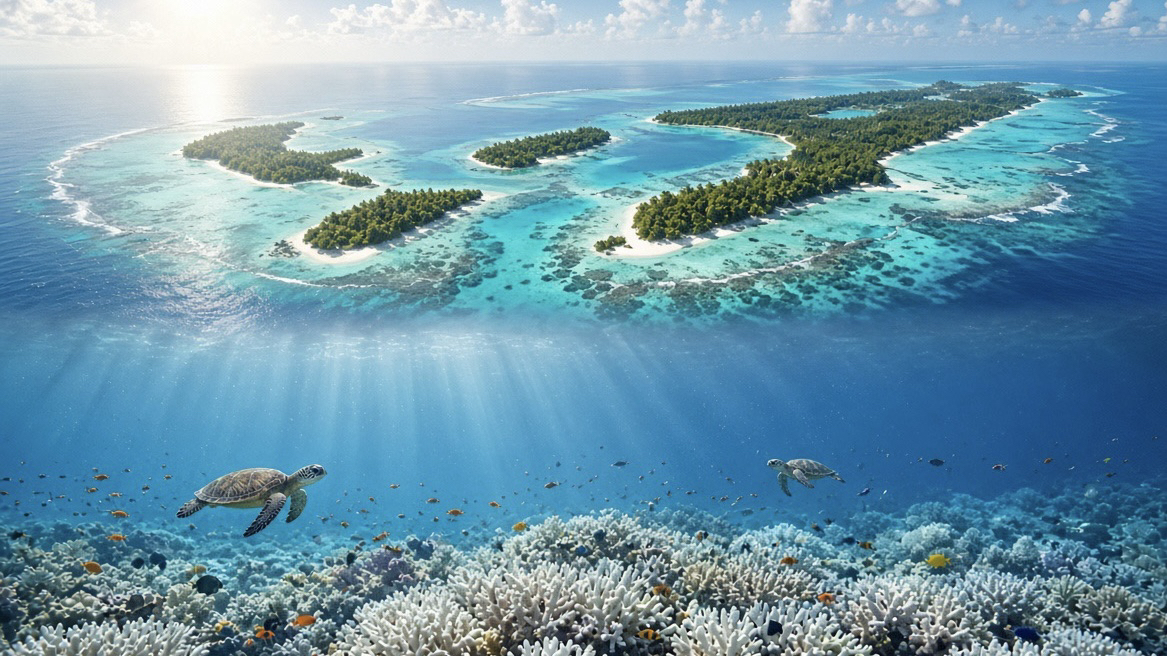
The meteorological authority is closely monitoring the situation, particularly because of the potential impacts on the Maldives. Among the main concerns is the unusually warm ocean temperatures, which can place additional stress on coral reefs and threaten their survival.
Changes in rainfall patterns caused by El Niño could also have negative effects on agriculture, while changes in ocean currents and marine conditions could create challenges for the fisheries sector.
The latest developments highlight the Maldives’ vulnerability to changes in climate and weather patterns, particularly given the country’s dependence on its marine environment.
El Niño triggers emergencies in Central America
The strengthening El Niño is also having serious impacts elsewhere. Panama declared a state of emergency due to the phenomenon, with the country’s Interior Minister, Dinora Montenegro, saying the declaration would allow authorities to better prepare for the challenges ahead.
El Niño has already caused agricultural land in Panama to dry out, raising fears of hunger and food shortages.
Honduras and El Salvador have also declared states of emergency this month. Honduras issued its declaration on August 19, with 75 areas reportedly affected by extensive land drying linked to El Niño. El Salvador declared a state of emergency on August 25.
El Niño is a recurring climate pattern that develops in the Pacific Ocean. It changes wind patterns and causes sea surface temperatures in the central and eastern Pacific to rise above normal levels. These changes can disrupt weather patterns far beyond the Pacific, affecting rainfall, temperatures, agriculture and marine ecosystems around the world.
With El Niño continuing to strengthen, authorities in the Maldives are closely watching its development and the potential consequences for the country’s reefs, fisheries and other climate-sensitive sectors.