



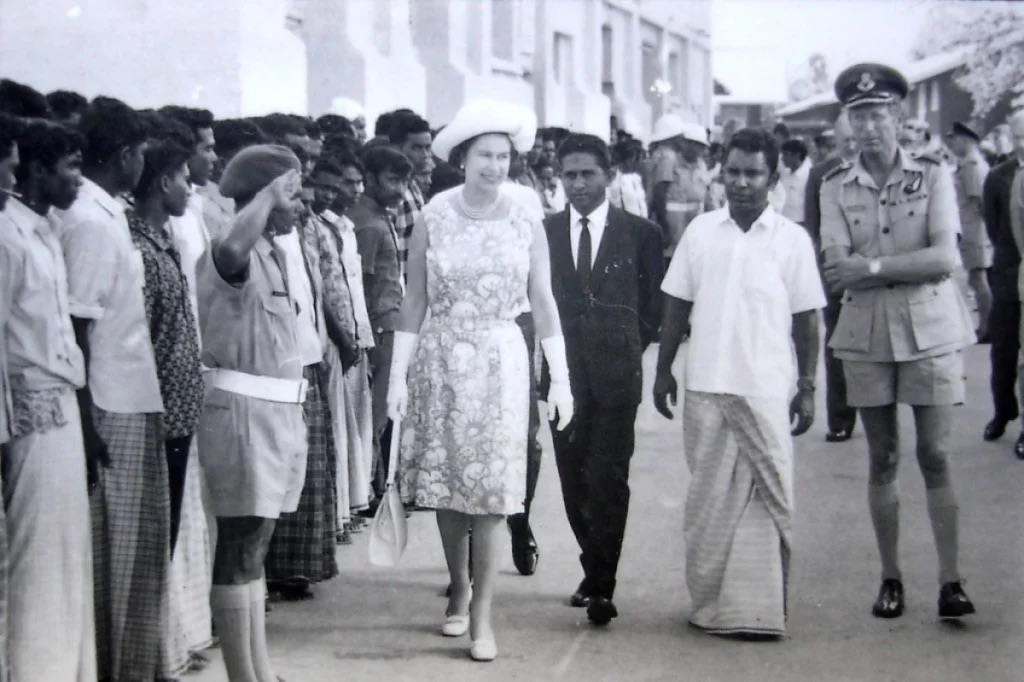
When people picture the Maldives, the mind instantly wanders to turquoise lagoons, pristine coral reefs, and tranquil stilt villas. But beneath the surface of this idyllic archipelagic nation lies a fierce historical thread of resilience and shrewd diplomacy—none more fascinating than the British Protectorate Era (1887–1965).
For nearly eight decades, the Maldives navigated a rare political tightrope: held under the military umbrella of the British Empire without ever losing its soul, its laws, or its local rule. This is the story of how a small island nation struck a deal with the world’s greatest superpower, weathered global war, survived a rebellion, and emerged completely sovereign.
The Deal of 1887: Shielding the Atolls
By the late 19th century, foreign merchant pressures—particularly from Bora traders—and internal political turbulence threatened the stability of Malé. Looking across the Indian Ocean at European powers actively colonizing neighboring South Asia, Sultan Muhammad Mueenuddeen II made a strategic geopolitical decision.
On December 16, 1887, in Colombo, Ceylon (now Sri Lanka), the Sultan signed an official agreement with the British Crown.
The terms were remarkably unique:
- The Exchange: Britain assumed absolute control over Maldivian foreign policy and defense.
- The Catch: British administrators were strictly prohibited from interfering in internal governance, Islamic legal traditions, or local trade.
Unlike India or Ceylon, the Maldives was never directly occupied or governed by British colonial officers. The Sultans continued to reign from Malé, paying a nominal annual ceremonial tribute while keeping the British Empire at arm’s length.
World War II: The Secrets of RAF Gan
The geopolitical value of the Maldives exploded during World War II. Positioned directly along crucial sea lanes between the Middle East and East Asia, the southern atoll of Addu became a vital military asset for the Allies.
In 1941, the British Royal Air Force (RAF) secretly transformed Gan Island into a strategic airbase and naval staging point. Local Maldivians found employment, learned technical skills, and were exposed to English, setting off a rapid shift in the socio-economic landscape of the deep south.
                     THE PROTECTORATE TIMELINE

  1887 ──► The Pact Signed in Colombo
  1941 ──► RAF Airbase Built on Gan Island (Addu Atoll)
  1953 ──► Brief 1st Republic Formed (Fails in under a year)
  1959 ──► The Southern "Suvadive" Rebellion Breaches Unity
  1965 ──► Independence Declared in Colombo (July 26)
Cold War Crises and the Southern Secession
The post-WWII period brought nationalistic fervor to Malé, led by the dynamic and resolute Prime Minister Ibrahim Nasir. As Britain sought to extend its military lease on RAF Gan in the late 1950s, Nasir pushed back hard—demanding higher payments, shorter lease terms, and greater national control over international trade.
This tension triggered a dramatic domestic crisis:
- The Rebellion (1959): The southern atolls (Addu, Huvadhu, and Fuvahmulah), highly dependent on British employment at RAF Gan, grew furious over Malé’s economic restrictions. They seceded, forming the short-lived United Suvadive Republic under leader Abdulla Afif.
- The Standoff: Malé accused British forces stationed on Gan of covertly backing the rebellion to protect their airbase. Through firm statecraft and military maneuvering, Nasir neutralized the breakaway state by 1963, forcing the British to negotiate solely with the central government in Malé.
July 26, 1965: A Sovereign Horizon
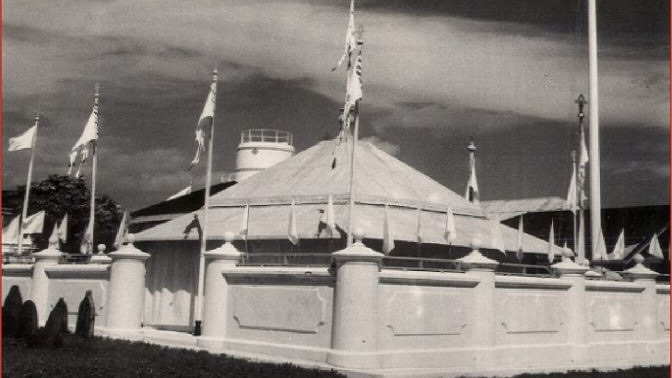
By 1965, Prime Minister Nasir made it clear to London that partial autonomy was no longer enough. On July 26, 1965, inside Westminster House in Colombo, the historic Declaration of Independence was signed. The 78-year protectorate agreement was officially dissolved.
Though Britain retained the airbase on Gan until voluntarily withdrawing in 1976, the Maldives officially took its place on the world stage as a fully independent, sovereign nation.
The Legacy: A Colony That Never Was
The British Protectorate era left an indelible mark on Maldivian history—not because of what was changed, but because of what was preserved.
Because British officers never ruled from within Malé, the Maldives emerged from the shadow of the Empire with its Dhivehi language, Islamic faith, cultural heritage, and indigenous political structures completely intact. It remains a masterclass in how a small island state managed to leverage geographic isolation and smart diplomacy to survive the age of empires.


One thought on “Shadows, Sovereignty, and the Sea: Inside the Maldives’ 78-Year British Protectorate Era”