



Today marks 900 years since the Maldives embraced Islam, a historic transformation that changed the religious, political and cultural course of the nation and established the Islamic identity that has remained at the heart of Maldivian society ever since.
On 2 Rabi al-Thani 1448 AH, the Maldives marks nine centuries since the kingdom embraced Islam in 548 AH. The date is officially commemorated in the Maldives as the day the nation accepted Islam.
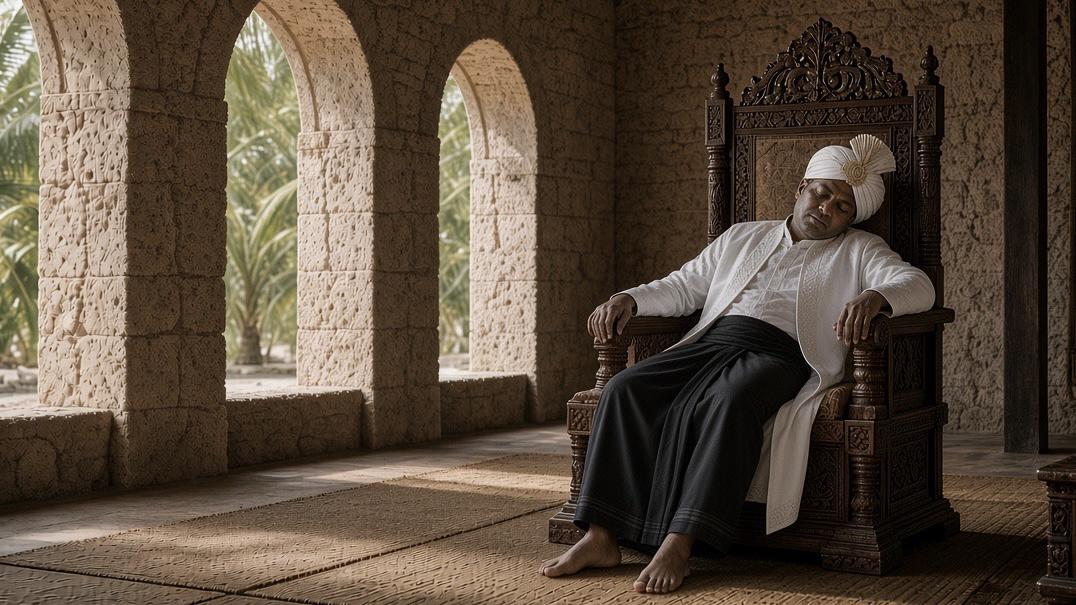
The conversion is traditionally associated with the reign of Sri Tribuvana Aditya Maha Radun, the ruler who sat upon the throne of the Maldives before accepting Islam and becoming the first Muslim ruler of the Islamic Maldives.
The Maldives before Islam
Before the coming of Islam, the Maldives was influenced by several religious traditions, with Buddhism becoming particularly prominent in the centuries immediately preceding the Islamic period.
The islands were nevertheless connected to the wider Indian Ocean world. Arab, Persian and other Muslim merchants and sailors travelled through the region, and Islam had therefore reached the Maldives before the royal conversion.
However, the major transformation came when Islam reached the royal court.
It was the conversion of the king that placed the Maldives under the authority of Islam and began the process through which the entire country became Muslim.
Sheikh Yusuf Shamsuddin al-Tabrizi
The traditional Maldivian historical account recorded by Qadi Hassan Tajuddin identifies the Muslim scholar who came to the Maldives as Maulana al-Shaykh Yusuf Shamsuddin al-Tabrizi.
He was associated with Tabriz, a historic city in Persia, and according to the Tārīkh Islām Dībā Mahal, he travelled from Tabriz to the Maldives and called its people towards Islam.
His arrival became one of the most important events in Maldivian history.
Tajuddin’s account describes the Maldives at the time as a kingdom whose people followed pre-Islamic religious beliefs. The coming of Sheikh Yusuf Shamsuddin marked the beginning of a great change in the religious life of the kingdom.
The miraculous event
The traditional account preserved by Tajuddin also relates a remarkable event involving a terrifying creature a Daabba known as the Rannamaari.
The creature appeared in a frightening form, causing fear among the people and the royal court. The event became closely connected with the preaching of Sheikh Yusuf Shamsuddin and his call towards Islam.
Through the events that followed, the king came to accept Islam.
The conversion of the ruler was therefore not merely a political change. According to the traditional account, the king personally accepted the truth of Islam and entered the faith.
The king becomes Muslim
With the king’s acceptance of Islam, a historic transformation took place.
The Maldivian historical account describes the ruler who had sat upon the throne as Sri Tribuvana Aditya Maha Radun.
After accepting Islam, his name was changed to:
As-Sultan Muhammad bin Abdullah Sri Bavanaditta Maha Radun.
Among Maldivians, the ruler became widely known by the name:
Dharumavantha Radun.
Thus, the ruler who had governed the pre-Islamic kingdom became the Muslim Sultan whose reign marked the beginning of the Islamic era of Maldivian history.
According to the traditional account, with the king’s conversion, the whole nation came under the shade and protection of Islam.
The royal court followed the ruler, and Islam became the faith of the kingdom.
The Kingdom of Dheeva Mahal officially becomes Sultanate of Mahaldibiyah. السلطنة المحلديبية (Locally called: Mahaldeeb)
Islam spreads throughout the islands
The conversion of the king was only the beginning.
According to Tajuddin’s account, after accepting Islam, the Sultan sent religious men to the different islands of the Maldives to call their inhabitants towards Islam.
These men travelled throughout the archipelago and taught the people the religion of Islam.
The traditional chronicle describes the process as eventually reaching every part of the kingdom. Some communities accepted Islam willingly, while others resisted, but the spread of Islam continued until the islands came under the Islamic faith.
This is why the conversion of the Maldives is remembered not simply as the conversion of a king, but as the beginning of the conversion of the entire archipelago.
Historical research also supports the understanding that the process extended beyond the initial royal conversion, with Islam becoming established in different parts of the country over time.
Another tradition: Abu al-Barakat al-Barbari
Another famous account of the conversion was recorded centuries later by the renowned Moroccan traveller Ibn Battuta, who visited the Maldives in the 14th century.
Ibn Battuta names the Muslim who converted the king as Abu al-Barakat Yusuf al-Barbari, rather than Yusuf Shamsuddin al-Tabrizi.
His account tells the famous story of Rannamaari, a terrifying sea spirit that was said to demand a virgin girl as an offering.
According to the tradition, Abu al-Barakat volunteered to take the girl’s place and spent the night reciting the Qur’an. When the morning came, Rannamaari had not appeared.
The event convinced the king of the power of Islam, and he accepted the faith.
Ibn Battuta also reported an inscription associated with the conversion.
The two accounts therefore preserve different traditions concerning the Muslim scholar involved. The Maldivian chronicle of Tajuddin gives the name Yusuf Shamsuddin al-Tabrizi, while Ibn Battuta gives Abu al-Barakat Yusuf al-Barbari. The two traditions nevertheless agree on the central event: the ruler accepted Islam and the kingdom subsequently became Muslim.
The beginning of the Islamic Maldives
The importance of the king’s conversion was immense.
Once the ruler accepted Islam, the religion was no longer simply present among individual merchants or visitors to the islands. Islam became the religion of the royal court and the foundation of the kingdom.
The old religious order was replaced by an Islamic one.
Mosques were established, Islamic learning spread and Muslim scholars became increasingly important in Maldivian society.
The royal government began operating within an Islamic framework, while Islamic names, titles, customs and laws became part of Maldivian life.
The transformation would eventually shape almost every aspect of the country.
From one king to an entire nation
The Conversion of the Maldives to Islam was not accomplished merely through the conversion of the capital.
Religious teachers and messengers travelled to the islands, spreading the teachings of Islam.
The traditional chronicle records that the Sultan sent people to the islands who converted their inhabitants, eventually leaving the Maldives with no island outside the Muslim faith.
Historical research similarly indicates that the royal conversion was followed by a wider process of conversion, during which Buddhist religious institutions disappeared and Islamic institutions became established throughout the country.
The Maldives therefore entered the Islamic world as a united Muslim kingdom.
Nine centuries of Islam
The significance of the conversion can be seen in the centuries that followed.
The rulers of the Maldives continued to govern as Muslim sultans. Mosques became central to island communities, Islamic scholarship became an important part of education, and Arabic and Islamic terminology became deeply incorporated into the Dhivehi language.
When Ibn Battuta arrived in the Maldives centuries later, he found a firmly Muslim society with numerous mosques and a population that was entirely Muslim.
The transformation begun in the reign of Sri Tribuvana Aditya had therefore become deeply rooted in Maldivian life.
Since then except one ruler, every other ruler of the kingdom were Muslims.
900 years later
Today, 900 years after the Maldives embraced Islam, the faith remains at the centre of the country’s identity.
From the conversion of Sri Tribuvana Aditya Maha Radun, to his new identity as As-Sultan Muhammad bin Abdullah Sri Bavanaditta Maha Radun, and the name by which Maldivians remember him, Dharumavantha Maha Radun, the event marked the beginning of a new chapter in the history of the nation.
The story preserved in Maldivian historical tradition is one of a ruler accepting Islam, followed by the transformation of his kingdom and the spread of the faith throughout the islands.
For nine centuries, that transformation has shaped the Maldives.
On this 900th anniversary, the Maldives looks back to the moment when its king accepted Islam and the nation entered the Islamic era a faith that has remained at the heart of Maldivian life for nine hundred years.