



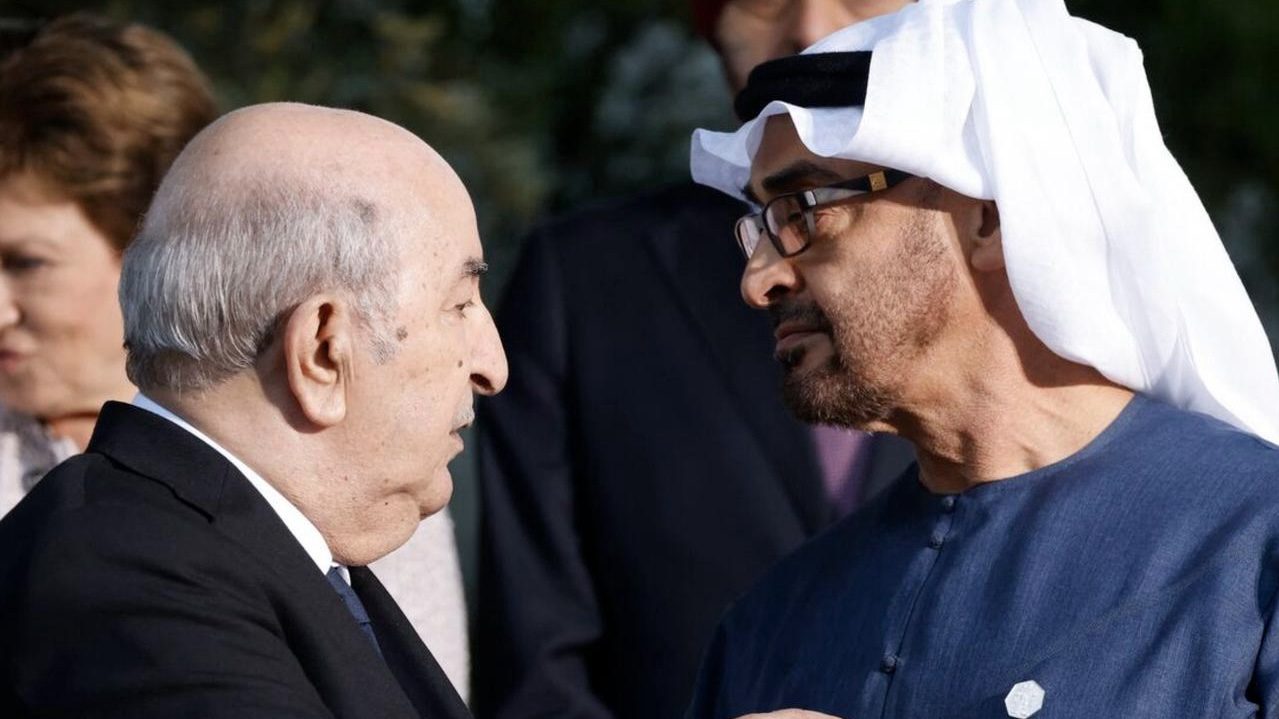
ALGIERS — September 10, 2026: Algeria has severed diplomatic relations with the United Arab Emirates, accusing Abu Dhabi of a series of “provocative and hostile” actions after years of increasingly strained relations between the two countries.
The Algerian Foreign Ministry announced the decision on Thursday, saying it had exhausted all available means to preserve bilateral relations.
“Algeria has decided, today (Thursday), to sever diplomatic relations with the United Arab Emirates,” the ministry said, according to Algeria’s official APS news agency.
Algeria did not identify a single incident as the direct trigger. Instead, it accused the UAE of continuing “regrettable and unjustified” conduct despite repeated warnings, saying its actions had reached a point where they could no longer be considered acceptable or tolerable.
The UAE ambassador in Algiers was summoned and given 48 hours to comply with the decision.
The diplomatic rupture follows years of growing disagreements between Algiers and Abu Dhabi over regional affairs and the two countries’ competing foreign-policy positions.
Algeria opposes the normalization of relations with Israel, while the UAE established diplomatic relations with Israel in 2020 through the US-brokered Abraham Accords. Morocco, Algeria’s regional rival, also normalized relations with Israel that year.
The two countries are also on opposite sides of the Western Sahara dispute.
Algeria supports the Polisario Front and an independent Western Sahara, while the UAE supports Morocco’s claim to sovereignty over the disputed territory and has established a consulate there.
Their interests have also increasingly intersected across the Sahel and North Africa, where Algeria has become increasingly wary of the UAE’s growing regional influence.
Algerian President Abdelmadjid Tebboune has repeatedly criticized what he described as the actions of an unnamed Gulf “micro-state” or “statelet,” in comments widely understood to refer to the UAE.
In a televised interview in July, Tebboune said:
“Wherever they set foot, blood flows.”
He added that the UAE had had a “very negative impact” wherever it became involved.
“We want them to stay away, so that blood does not flow in our country,” Tebboune said.
The Algerian president also indicated that the diplomatic rupture could have happened earlier.
He said relations would have been broken “long ago” if Algeria had not been concerned about further “deepening divisions” in the Arab world.
Tebboune had previously said that Algeria enjoyed “brotherly” relations with Saudi Arabia, Kuwait, Oman and Qatar, while referring to one Gulf state as an exception and accusing it of interfering in Algeria’s internal affairs and seeking to destabilize the country. The unnamed state was widely understood to be the UAE.
The September decision was preceded by concrete steps showing the deterioration in relations.
In February 2026, Algeria began the process of cancelling an air-services agreement with the UAE signed in 2013.
The two governments had also increasingly differed over conflicts and political developments in the wider region, particularly in Libya, the Sahel and Sudan.
Algiers has been particularly sensitive to the growing involvement of outside powers in countries bordering its southern and eastern spheres of influence.
Algeria’s latest statement said it had repeatedly warned the UAE about the consequences of its conduct but that Abu Dhabi had continued its actions.
Following the diplomatic rupture, Algeria announced that it would close its airspace to UAE-registered civilian and military aircraft beginning Friday, September 11.
The restriction was announced by the Algerian Defence Ministry, although UAE commercial flights to and from Algiers will remain exempt until the end of 2026, when the existing arrangement expires.
The move marks a further escalation beyond the diplomatic break and directly affects aviation links between the two countries.
The UAE has responded without announcing a reciprocal break in relations.
In an official statement on September 10, the UAE Ministry of Foreign Affairs said it respected relations with all countries and remained committed to developing relations based on shared interests, understanding, cooperation and prosperity.
Abu Dhabi said it “hopes that this decision will be temporary” and that the fraternal ties between the two peoples could be preserved.
The UAE also highlighted the longstanding links between the two populations, particularly the Algerian community living in the UAE and Algerian visitors.
UAE presidential diplomatic adviser Anwar Gargash separately wrote that diplomacy should be based on “rationality, communication and clarity of interests”, rather than “riddles and signals that require decoding.” Although Gargash did not explicitly mention Algeria, his remarks came after Algiers announced the rupture.
The UAE’s response therefore leaves open the possibility of restoring relations in the future rather than immediately escalating the dispute.
The rupture nevertheless represents a major diplomatic divide between Algeria, one of North Africa’s largest states, and the UAE, one of the Gulf’s most influential regional powers.
For Algeria, the decision comes after years of warnings and increasingly direct criticism from President Tebboune. For the UAE, the official response has so far emphasized the historical ties between the two peoples and expressed hope that the break will not be permanent.