

The United Nations General Assembly has adopted its first declaration dedicated to sea-level rise, recognising the Maldives’ decades-long diplomatic efforts to address the threat and affirming principles aimed at protecting the sovereignty and maritime rights of vulnerable island nations.
The United Nations Declaration on Sea Level Rise was adopted by consensus on September 24, 2026, during a high-level meeting at the opening of the UN General Assembly’s 81st session. The declaration was subsequently submitted as a draft resolution for formal adoption by the Assembly.
The declaration recognises the 1989 Malé Declaration on Global Warming and Sea Level Rise, which emerged from a conference hosted by the Maldives that brought small island states together to warn the international community about the consequences of rising seas.
Maldives’ Ambassador and Permanent Representative to the United Nations highlighted the milestone describing it as the culmination of 37 years of diplomacy.
“Rising seas can change coastlines. They cannot erase nation-States,” the ambassador wrote.
The ambassador recalled that the 1989 conference was held at Kurumba resort, originally known as Vihamanafushi, and marked the beginning of a sustained international effort to bring the existential threat facing small island nations to global attention.
At the time, the ambassador was a young diplomat at the Maldives Embassy in Colombo and recalled distributing copies of the Malé Declaration to journalists in an effort to spread its message internationally.
Protecting sovereignty and maritime rights
A central element of the new declaration is the recognition that sea-level rise should not undermine the continuity of statehood, national sovereignty or UN membership.
It also affirms that states can maintain lawfully established maritime zones despite physical changes caused by climate-related sea-level rise, providing greater legal certainty for countries whose coastlines and territories face increasing risks.
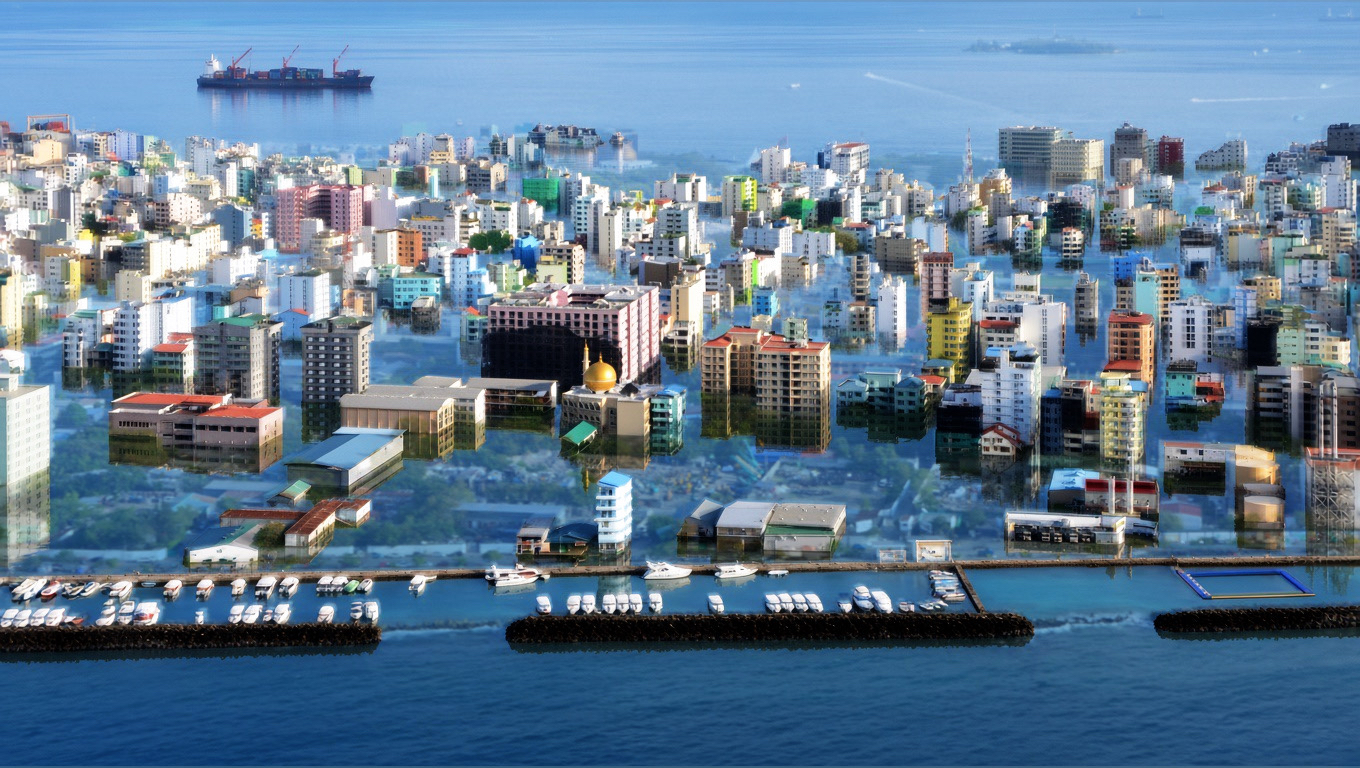
These provisions are particularly significant for low-lying island nations such as the Maldives, where rising seas threaten infrastructure, livelihoods, ecosystems and economic development.
The declaration further recognises the need to protect livelihoods and cultures and strengthen adaptation finance for countries facing the consequences of sea-level rise.
According to the draft resolution submitted to the General Assembly, the declaration was developed following the high-level meeting on addressing the existential threats posed by sea-level rise, held on September 24 in accordance with General Assembly decision 78/558 of August 1, 2024.
The document describes sea-level rise as an existing and accelerating threat driven primarily by ocean warming and the melting of ice sheets and glaciers. It warns that the consequences are eroding development gains, particularly in small island developing states and least developed countries.
It calls for stronger international cooperation, urgent and coordinated action, and adaptation and mitigation measures based on the best available science and knowledge. It also affirms that responses must comply with international law, including the United Nations Convention on the Law of the Sea.
Maldives calls for urgent action
Speaking at the high-level meeting, Maldivian Vice President Hussain Mohamed Latheef stressed that protecting countries from rising seas required concrete action rather than delays.
The Vice President called for faster access to financial assistance for small island developing states and urged the international community to uphold their rights under international law.
The Maldives has consistently advocated for stronger international cooperation on climate change, including through efforts to secure legal protections for vulnerable island states and ensure that climate finance reaches countries facing the greatest risks.
The country has also highlighted the need to incorporate sea-level rise into national development planning, infrastructure design and efforts to protect livelihoods.
The adoption of the declaration marks a significant development in the Maldives’ longstanding campaign to ensure that the physical consequences of climate change do not translate into the loss of legal rights or international recognition for affected nations.
Reflecting on the milestone, the ambassador said the 1989 initiative had brought small states together to warn the world about what rising seas could take away.
“Today, the world has affirmed what rising seas cannot take away: our sovereignty, our rights, and our place among nations.”