

Rising from the turquoise depths of the Indian Ocean, the archipelago of the Maldives has long captured the imagination of travelers, merchants, and historians. Today, the nation is globally renowned as a luxury island paradise, but beneath its pristine modern facade lies a dramatic, centuries-old political history. For more than eight centuries, from its historic conversion to Islam in 1153 until the formal abolition of the crown in 1968 the Maldives was governed as an independent Sultanate. This sovereignty was shaped, preserved, and eventually dissolved by a succession of royal houses. Tracing the trajectory of the Maldivian dynasties reveals a compelling narrative of maritime intrigue, religious transformation, fierce anti-colonial resistance, and peaceful democratic evolution.
The Theemuge Dynasty and the Dawn of the Islamic Sultanate (~1117–1388 CE)
The foundational chapter of organized dynastic rule in the Maldives begins with the Theemuge Dynasty. Prior to the 12th century, the islands practiced Buddhism and were organized around localized chieftainships and maritime trade networks. The political landscape shifted dramatically when King Koimala established his royal seat in Malé, unifying the central atolls.
The defining moment of the Theemuge era occurred in 1153 CE, when the ruling monarch converted to Islam, adopting the title Sultan Muhammad al-Adil. This transition fundamentally altered the cultural, legal, and social fabric of the islands, integrating the Maldives into the broader Islamic trading network of the Indian Ocean. Despite this profound shift, the dynasty was ultimately vulnerable to internal political instability. Palace coups, succession disputes, and fierce rivalries including multiple reigns by the notable female monarch Sultana Rehendi Khadijah gradually eroded the family’s grip on power. In 1388 CE, the last Theemuge ruler was deposed, clearing the way for a new ruling house.
The Hilaalee Dynasty and the Shadow of Colonialism (1388–1558 CE)
Succeeding the Theemuge house was the Hilaalee Dynasty, which held power for roughly 170 years. This period was characterized by active diplomacy with regional powers and bustling maritime commerce, particularly in cowrie shells and coir rope, which served as universal currency across parts of Asia and East Africa.
However, the Hilaalee era came to a tragic and abrupt halt in the mid-16th century. As European maritime powers expanded aggressively into the Indian Ocean, Portuguese traders cast a covetous eye on the strategic atolls of the Maldives. In 1558, a formidable Portuguese armada invaded Malé. Sultan Ali IV (Ali Rasgefaanu) died heroically on the battlefield defending his capital. The Portuguese victory plunged the islands into a harsh 15-year colonial occupation, brutally cutting short the Hilaalee lineage and subjecting the populace to forced conversions and heavy economic exploitation.
The Utheemu Dynasty and the Uprising of Resistance (1632–1692 CE)
Out of the ashes of Portuguese occupation emerged one of the most celebrated chapters in Maldivian history. Led by the national hero Muhammad Thakurufaanu, alongside his brothers, a tenacious guerilla resistance was waged against the colonial occupiers. On July 1, 1573, Malé was liberated, restoring Maldivian sovereignty.
While the liberation occurred in the 16th century, the formal Utheemu Dynasty was officially established with the coronation of Sultan Muhammad Imaduddin I in 1632. The Utheemu era is frequently remembered as a golden age of national pride, economic recovery, and Islamic scholarship. Fortifications were built to guard against future foreign incursions, and internal stability flourished. Yet, the dynasty’s downfall was ultimately internal rather than foreign. Following a tragic explosion at sea that claimed the lives of the young Sultan and his mother, the direct royal bloodline dwindled. The extinction of eligible heirs by 1692 plunged the nation into a decade of short-lived interregnums and brief rival ruling houses.
The Dhiyamigili Dynasty and Regional Invasions (1704–1759 CE)
Restoration of prolonged stability arrived with the Dhiyamigili Dynasty, founded in 1704 by Sultan Muhammad Imaduddin II. This administration is credited with commissioning important historical chronicles and stabilizing central authority.
Nevertheless, the geopolitical vulnerability of a small island nation persisted. In the early 1750s, the Maldives suffered a devastating invasion by the Ali Raja of Cannanore (Malabar forces) from the Indian mainland. The invaders captured Malé, burned parts of the city, and abducted the reigning monarch, Sultan Muhammad Imaduddin III, who died in captivity. Although local resistance fighters led by Muleegey Don Hassan Maniku successfully expelled the Malabar forces, the Dhiyamigili lineage struggled to fully recover. Persistent political rivalries and foreign machinations led to the deposition of the final Dhiyamigili heir in 1774, paving the way for the longest-reigning royal house in Maldivian history.
The Huraa Dynasty and the Path to the Modern Republic (1774–1968 CE)
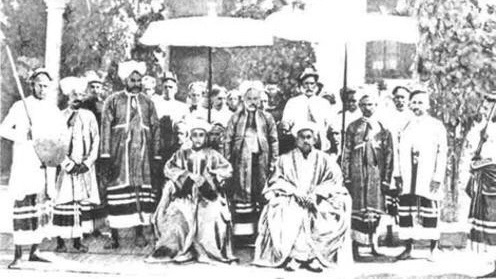
Spanning nearly two centuries, the Huraa Dynasty witnessed the Maldives navigate the complex geopolitics of the modern world. Facing pressure from European expansionism in South Asia, the Huraa Sultans signed a landmark agreement with the British in 1887, establishing the Maldives as a British Protectorate. This arrangement guaranteed military defense and foreign policy oversight from London while preserving the Sultanate’s internal autonomy and religious traditions.
As the 20th century progressed, global winds of change reached the Indian Ocean. In 1932, the Maldives adopted its first written constitution, transitioning the absolute monarchy into a constitutional sultanate. The post-World War II era accelerated political transformation:
- The First Republic (1953): A brief experiment in abolishing the crown created the First Republic under Prime Minister Mohamed Amin Didi, though political unrest led to a restoration of the monarchy a year later.
- Full Independence (1965): The Maldives achieved complete independence from British protection on July 26, 1965.
- The Second Republic (1968): With independence secured, the question of the crown’s relevance came to the forefront. In March 1968, a national referendum was held, and the Maldivian public voted overwhelmingly to abolish the 815-year-old institution. On November 11, 1968, King Sir Muhammad Fareed Didi stepped down from the throne.
The centuries of dynastic rule in the Maldives reflect a remarkable story of survival. Across six major royal houses, the Maldivian people weathered internal palace intrigue, devastating foreign invasions by Portuguese and Malabar forces, and the shifting tides of British imperialism. When the monarchical era finally drew to a close in 1968, it did not end in the smoke of a violent revolution, but through the deliberate, democratic choice of a sovereign people transitioning into the modern era. Today, the legacy of these dynasties survives not in palaces of absolute power, but in the enduring religious identity, cultural heritage, and hard-won independence of the modern Maldivian republic.