

Eagle Hills Chairman Mohamed Alabbar has said the company expects to invest around US$500 million in the first housing component of the Rasmalé development, while stressing that the wider project could bring significant employment, tourism and tax revenue to the Maldives.
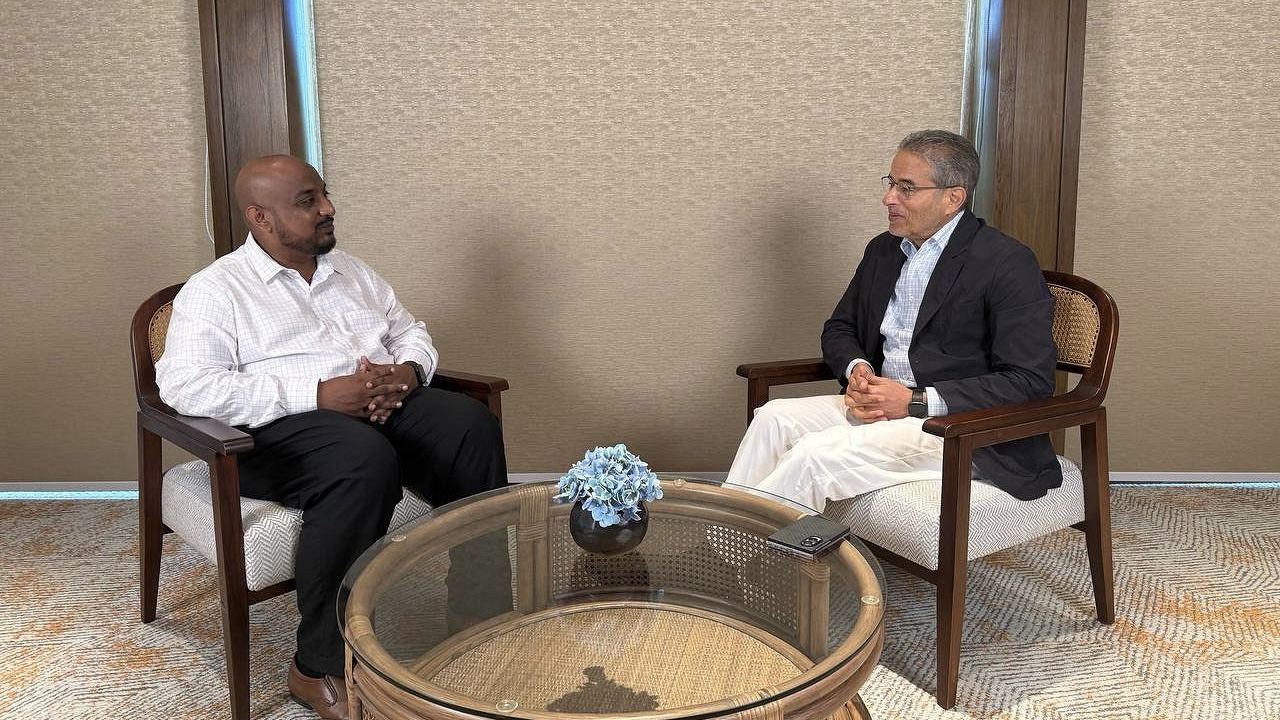
Speaking to Sun journalist Ahmed Sail Ali in a 15-minute interview, Alabbar addressed questions surrounding the scale of the project, its financing, benefits to the Maldivian economy and concerns over foreign involvement in the development.
Alabbar said Eagle Hills would finance the project through a combination of its own funds, bank financing and revenue from property sales. He stressed that the company would have to put in its own money before taking bank loans.
The first major investment will be the planned 5,000 housing units in Hulhumalé, which Alabbar said would require approximately US$500 million. He said Eagle Hills would initially fund the project itself and recover the investment through the wider Rasmalé development.
He said the design and contractor appointment process would generally take around 12 months, although the company would work to shorten the timeline, with physical construction expected to begin within roughly a year.
Alabbar: Project could generate 40,000 jobs
Alabbar said the development could create around 40,000 jobs during its construction phase, while generating between 15,000 and 18,000 permanent jobs once completed.
He also said he expects the project to attract at least one million additional tourists to the Maldives.
On government revenue, Alabbar estimated that the project could generate close to US$20 billion in tax revenue over its lifetime.
He also highlighted the flow of foreign currency into the Maldivian economy, saying money generated through apartment sales would remain in Maldivian banks rather than being transferred to Abu Dhabi.
Alabbar responds to concerns over foreign control
The Eagle Hills chairman was also questioned about concerns surrounding the development of such a large area by a foreign company.
Alabbar said Eagle Hills’ approach is to respect the laws of the country in which it operates. If Maldivian regulations allow land to be leased for 99 years, he said the company would have to operate according to those rules.
He added that if a company cannot accept a country’s regulations, it would be difficult for it to do business there.
Alabbar also acknowledged that public concerns must be addressed through transparency and accountability.
He explained that the detailed agreement has not yet been made public because it has not been fully finalised. According to Alabbar, the information should be disclosed once the agreement is completed.
When asked what would happen if Eagle Hills failed to implement the project as agreed, Alabbar did not give a direct answer. However, he said the final agreement must protect the rights of both the Maldivian government and Eagle Hills, rather than placing an unfair burden on either side.
He reiterated that the company had committed to investing US$500 million before receiving returns from the housing project, adding that a developer must consider the benefits delivered to the public rather than seeking to take all the benefits for itself.
Rasmalé planned as a major waterfront development
Alabbar said his immediate goal is to sign the detailed final agreement for Rasmalé as soon as possible, with the project’s success depending on how the financing, contractual arrangements and long-term implementation are structured.
The Rasmalé development, being undertaken by Eagle Hills, covers approximately 500 hectares and is planned as a large mixed-use waterfront development incorporating residential, commercial, hospitality and public facilities.
The Maldivian government and Eagle Hills signed an agreement on 21 September covering the commercial terms for the development of the Maldives Waterfront and Marina in Rasmalé.