


Nestled in the mist-shrouded valleys of southwestern Sri Lanka lies Ratnapura—a name derived directly from the Sanskrit words Ratna (gem) and Pura (city). For thousands of years, this modest region has served as the beating heart of global sapphire production, earning Sri Lanka its historical moniker, Ratna-Dweepa (The Island of Jewels).
While millions know of Ceylon sapphires, fewer are familiar with the ancient history, geological quirks, and lesser-known lore surrounding Ratnapura’s legendary mines.
An Ancient Legacy: From King Solomon to Serendib
The history of gem mining in Ratnapura stretches back over 2,500 years. Long before modern geologists mapped its mineral wealth, ancient civilizations spoke of the valley in hushed, almost mythical tones:
- King Solomon and Queen Sheba: According to historical legends, King Solomon dispatched emissaries to the island of Ceylon to retrieve a breathtaking, peerless ruby to woo the Queen of Sheba.
- The Tales of Sinbad: Arabian sailors who traded across the Indian Ocean dubbed the region Serendib. The stories of Sinbad the Sailor feature a “Valley of Jewels”—a direct nod to the rich alluvial riverbeds of Ratnapura.
- Chronicles of Explorers: Famed travelers including Marco Polo (13th century) and Ibn Battuta (14th century) wrote extensive records detailing how locals retrieved precious stones from the river sands around Adam’s Peak.
Ancient Names for Sri Lanka’s Gem Trade:
├── Taprobana  (Greeks & Romans)
├── Serendib   (Arab & Persian Traders)
└── Ratna-Dweepa (Ancient Sinhalese / Sanskrit)
Rare & Lesser-Known Facts About Ratnapura Mines
1. The Secrets of Illam (The Gem Layer)
Unlike gem mines in many parts of the world where stones are chiseled directly out of hard rock veins, gems in Ratnapura are found in ancient riverbeds. Over millions of years, monsoon rains eroded primary rock formations high in the mountains, washing corundum crystals down into alluvial plains.
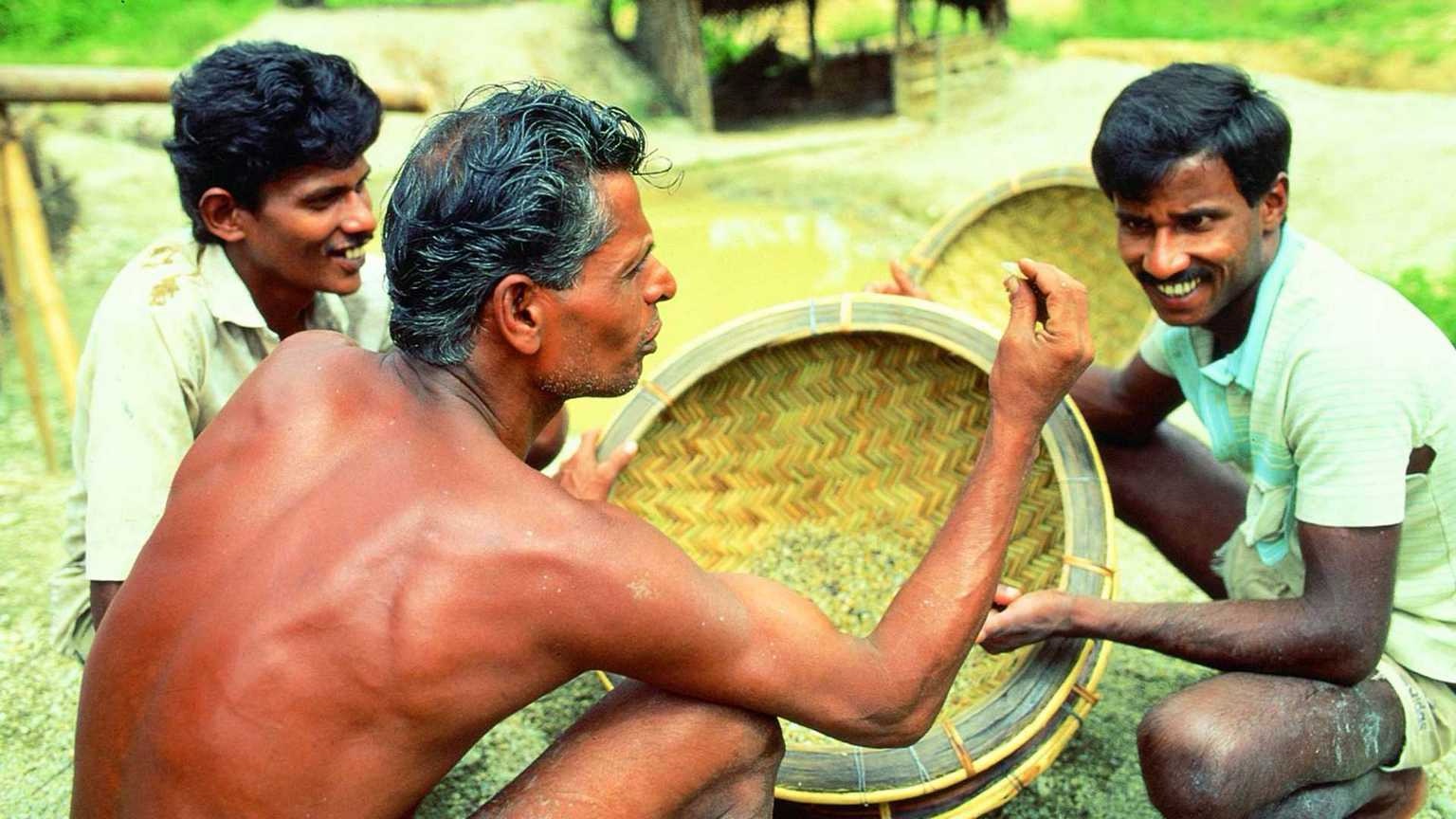
Miners dig shafts through layers of topsoil until they hit a distinctive gravel layer known locally as Illam. This sticky, clay-and-gravel slurry contains an unpredictable mixture of sapphires, rubies, spinels, cat’s eyes, and tourmalines all sitting in a single basket.
2. Low-Tech by Law
If you walk through Ratnapura today, you will rarely see heavy industrial bulldozers or massive mechanical excavators tearing up the earth. Sri Lanka strictly regulates gem mining, enforcing traditional, eco-friendly methods:
- Mining shafts are shored up manually using timber, bamboo, and fern leaves.
- Miners extract illam using hand tools and wicker baskets.
- The gravel is washed by hand in nearby rivers or circular wooden pits using rhythmic swirling movements that wash light soil away, leaving the heavy, dense gems at the bottom.
This manual approach preserves the local environment, prevents over-exploitation, and protects the livelihoods of small-scale mining cooperatives.
3. Home to World-Famous Giant Sapphires
Ratnapura’s alluvial soils have produced some of the most iconic gemstones in human history:
- The Star of India (563 carats): One of the largest star sapphires in existence, now housed in the American Museum of Natural History, originated from Sri Lanka.
- The Blue Giant of the Orient (466 carats): Mined in the Ratnapura district in 1907, this staggering stone remains one of the largest faceted blue sapphires ever documented.
- The Star of Adam (1,404 carats): Discovered in Ratnapura in 2015, this colossal star sapphire weighed nearly 10 ounces in its rough state.
4. The Padparadscha Sapphire
While deep royal blue sapphires are Ratnapura’s signature, the region is also famous for yielding the rarest corundum variant in the world: the Padparadscha. Named after the Sinhalese phrase padma raga (meaning “lotus blossom”), this extraordinarily rare stone features a unique, delicate blend of pink and orange tones reminiscent of a tropical sunset.
A Living Tradition
To visit Ratnapura today is to step into a trade where past and present seamlessly overlap. Every morning at daylight markets, traders sit side-by-side on plastic chairs or wooden benches, unrolling paper packets to inspect rough stones under natural sunlight—using methods virtually unchanged since the middle ages. It stands as a testament to an industry where the earth’s natural history meets human patience and heritage.