

For more than 25 years, efforts to give the Maldivian Rufiyaa its own standardized digital symbol have been moving through the Unicode process. Now, after a renewed proposal received official backing from the Maldives Monetary Authority and the symbol was finally added to the Unicode Standard, that long journey is nearing its end.
The first known attempt dates back to April 2000, among other additions, to introduce a Maldivian currency symbol into Unicode’s Currency Symbols block. The proposal was not successful for the currency symbol, with the lack of sufficient official recognition cited as a reason. The same proposal was, however, partially accepted for the encoding of the Thaana character ޱ.
For years afterwards, the Rufiyaa symbol continued to be represented through workarounds rather than a dedicated Unicode character. Some fonts replaced the dollar sign ($) with the Rufiyaa glyph, while others used font ligatures to display the symbol from combinations of existing characters.
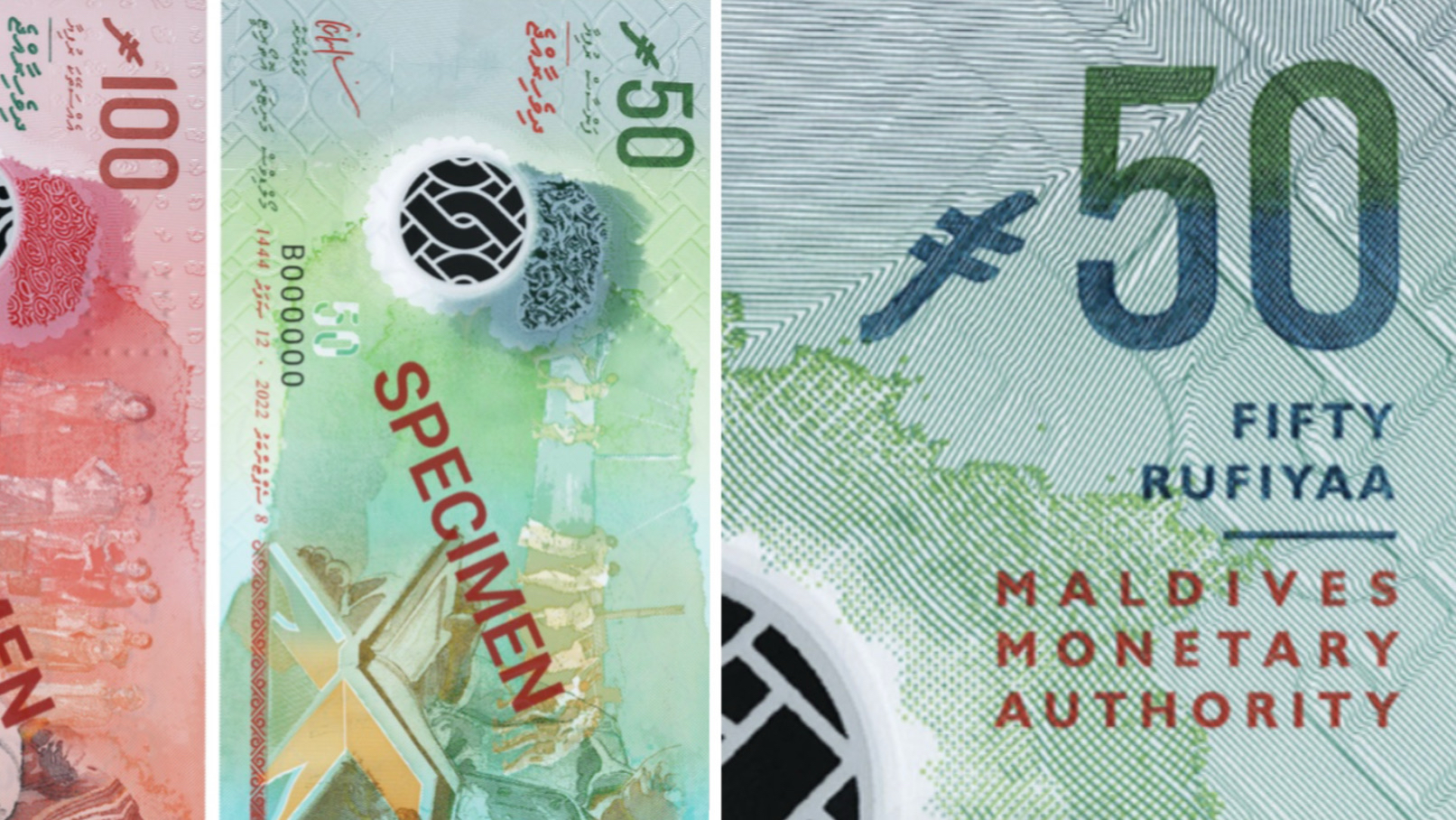
That changed after the Maldives formally adopted a new Rufiyaa symbol in 2022 following a nationwide search for designs. The selected design was formally adopted by the Maldives Monetary Authority (MMA), giving the symbol the official recognition that had been lacking during the earlier Unicode effort.
On 15 May 2025, the MMA formally endorsed a new proposal submitted to the Unicode Consortium by Naail Abdul Rahman and Abdulla Shafeeu. In its letter to the Unicode Technical Committee, the central bank described the symbol as an essential character in national and financial communications and highlighted the need for accurate digital representation, standardized display across platforms, financial software implementation and preservation of Maldivian monetary identity in the digital environment.
The revised proposal was subsequently considered by the Unicode Technical Committee. The committee provisionally assigned U+20C2 to the RUFIYAA SIGN in the Currency Symbols block, paving the way for its inclusion in Unicode 18.0.
On 16 September 2026, Unicode 18.0 was officially released, making U+20C2 RUFIYAA SIGN an internationally standardized character.
But the story does not completely end with Unicode.
The new character still needs to be adopted by operating systems, fonts, applications and keyboards. On Apple’s current iOS 27.0.1, for example, U+20C2 is not yet displayed with a native glyph. Instead, devices without a supporting font show an unsupported-character box.
There is, however, an existing model for how Apple could eventually implement it.
On an iPhone configured for Saudi Arabia, the English keyboard displays the Saudi Riyal sign as the primary currency symbol. Holding the currency key also provides access to other currency symbols, including the US dollar. A similar approach could be used for the Rufiyaa once Apple adds support for U+20C2.
The Unicode proposal itself also anticipated keyboard integration, recommending that the Rufiyaa occupy the position currently used by the dollar sign on common Thaana keyboard layouts.
This means the remaining step is no longer convincing Unicode that the Rufiyaa deserves a place in the digital world. That battle has already been won.
The Rufiyaa now has an official Unicode identity:
U+20C2 — RUFIYAA SIGN
What remains is for the world’s major technology platforms to catch up.
After a journey that began with an unsuccessful proposal in 2000, the Maldivian Rufiyaa is finally one step away from becoming a fully supported digital currency symbol — not through font tricks or substitutions, but as a character recognized by the world’s digital standards.
After 25 years, the wait may finally be coming to an end.