

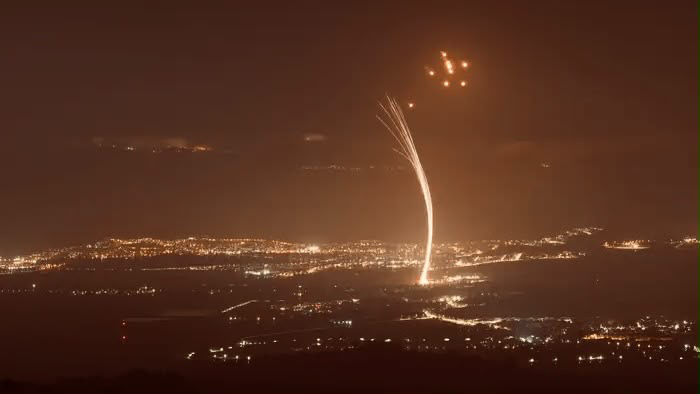
Three years ago today, on October 7, 2023, Hamas and other Palestinian armed groups launched a large-scale attack from the Gaza Strip into southern Israel. The attack, which Hamas called “Al-Aqsa Flood”, involved thousands of rockets and armed fighters entering Israeli communities and military positions by land, sea and air. The Maldives has consistently viewed the October 7 attack in the wider context of the Palestinian-Israeli conflict and the Israeli occupation, describing it as a retaliation for decades of Israeli actions against Palestinians. International investigations, however, have documented deliberate attacks on civilians and hostage-taking during the assault. More than 1,200 people in Israel were killed and 251 people were taken hostage, according to Israeli figures cited by the United Nations and Reuters.
Israel immediately declared war on Hamas and began a large-scale military aggression in Gaza. Israeli airstrikes began on October 7 itself, followed by a ground invasion later that month. Israel said the campaign was aimed at destroying Hamas and bringing the hostages home. The fighting rapidly transformed Gaza, with entire residential areas and neighbourhoods suffering extensive destruction. By early 2024, satellite analysis by the UN had already found that around 35 percent of Gaza’s buildings had been damaged or destroyed, with Khan Younis among the areas experiencing some of the greatest increases in destruction.
The first year of the war saw Israeli forces move through much of Gaza, from the northern areas and Gaza City towards Khan Younis and later Rafah. Neighbourhoods and population centres including Shuja’iyya, Jabalia, Beit Hanoun, Khan Younis and parts of Rafah were repeatedly subjected to major Israeli military operations. Jabalia, in particular, suffered extensive destruction during Israeli operations in 2024, while Khan Younis saw thousands of buildings destroyed or damaged.
The year also brought the deaths of several senior figures connected to Hamas and Hezbollah. Hamas deputy chief Saleh al-Arouri was killed in Beirut in January 2024, followed by Hamas military commander Marwan Issa in March. In July, Israel confirmed the death of Mohammed Deif, the long-time commander of Hamas’ military wing and one of the figures believed to have masterminded the October 7 attack. Hamas political chief Ismail Haniyeh was killed in Tehran later that month. Hezbollah’s long-serving leader Hassan Nasrallah was killed in an Israeli strike on Beirut in September, followed weeks later by the death of Hamas leader Yahya Sinwar in Gaza in October.
By the second anniversary in October 2025, the war had gone through repeated ceasefires and renewed offensives. A major ceasefire and hostage agreement reached in January 2025 temporarily halted much of the fighting, but it collapsed in March and Israel resumed large-scale operations. Hamas also lost further senior leadership, including Mohammed Sinwar, who Israel said it killed in May 2025. By September, the diplomatic pressure surrounding the war had intensified, while negotiations over another ceasefire and the remaining hostages continued.
A new ceasefire agreement began in October 2025, bringing a major reduction in the scale of the fighting and leading to the release of the remaining living Israeli hostages. However, the ceasefire did not resolve the central questions surrounding Hamas’ disarmament, Israel’s military presence in Gaza, the territory’s future administration or reconstruction. Violence also continued during the ceasefire period. By the third anniversary, large parts of Gaza remained destroyed, with satellite imagery showing particularly severe devastation in Rafah, Jabalia and Shuja’iyya.
As of October 1, 2026, Gaza’s health authorities reported that 74,040 Palestinians had been killed and 175,168 injured since the beginning of the war. The figures are reported by the Gaza Health Ministry and are not independently verified in full by the United Nations. Reuters reported on October 7 that the Palestinian death toll had surpassed 74,000. The destruction has also left much of Gaza’s population displaced, with large areas reduced to rubble and reconstruction remaining severely limited.
The war also produced major diplomatic changes. In 2024, Barbados, Jamaica, Trinidad and Tobago, the Bahamas, Norway, Ireland, Spain, Slovenia and Armenia formally recognized the State of Palestine. Spain, Ireland and Norway announced their recognition together in May 2024, becoming the first Western European countries to take that step in the conflict’s aftermath.
The recognition movement grew considerably in 2025. France, the United Kingdom, Canada, Australia, Belgium, Luxembourg, Malta, Portugal, Monaco, Andorra and San Marino all recognized Palestine during or around the September 2025 UN General Assembly period. The UN records that 10 countries announced recognition at the September 22 conference, while San Marino also joined the recognition wave. Palestinian authorities subsequently said the number of states recognizing Palestine had reached 160.
At the same time, several countries took diplomatic action against Israel. Bolivia severed diplomatic relations with Israel in October 2023, while Colombia broke relations in May 2024 and Nicaragua did so in October 2024. Belize also suspended relations. A UN report noted that, since October 2023, Belize, Bolivia, Colombia and Nicaragua had suspended diplomatic relations with Israel, while Bahrain, Chad, Chile, Honduras, Jordan, South Africa and Türkiye had downgraded their relations.
However Colombia’s diplomatic position later changed again: after breaking relations in 2024, Colombia restored diplomatic relations with Israel in August 2026 and restored mutual visa-free tourism for ordinary passport holders from September 2026.
Travel restrictions also became part of the diplomatic response. The Maldives became one of the clearest examples, formally prohibiting entry to people travelling on Israeli passports from 15 April 2025 after an amendment to its Immigration Act. The restriction remains in effect as of October 2026.
Three years after October 7, the consequences of that day extend far beyond the initial attack. More than 1,200 people were killed and 251 were taken hostage in Israel; more than 74,000 Palestinians have been reported killed in Gaza; major Gaza neighbourhoods and cities have been devastated; several senior Hamas and Hezbollah leaders have been killed; and the conflict has reshaped diplomatic relations and international recognition of Palestine. The ceasefire has reduced the scale of the war, but the political questions that followed October 7, the future of Gaza, Hamas’ role, Israeli security, Palestinian statehood and reconstruction remain unresolved as the third anniversary is marked today As Gaza is Getting ready for their first Election since Hamas took power in 2007.