

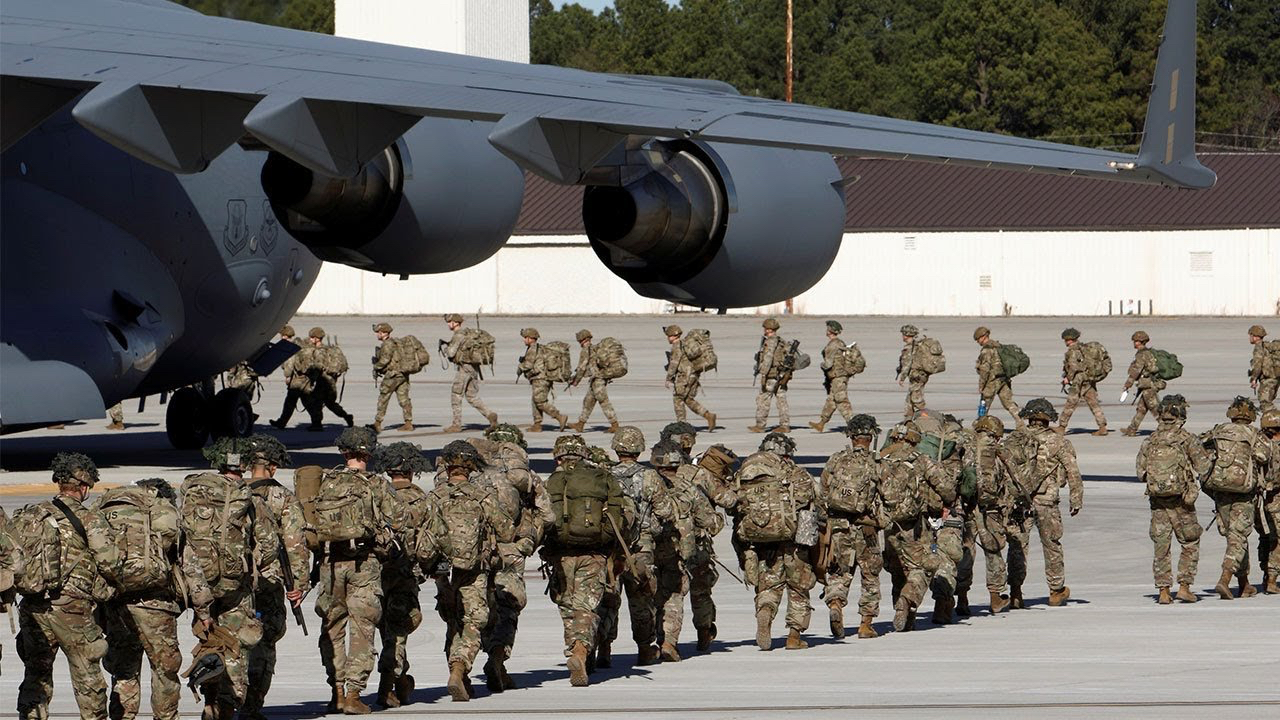
The United States has completed the withdrawal of its troops from Iraq, formally ending its Iraq-based military mission against the ISIS after 12 years.
The US Department of Defense said Wednesday that US-led coalition forces and equipment had completed an “orderly departure” from Erbil Air Base in Iraq’s semi-autonomous Kurdistan Region.
The withdrawal follows a 2024 agreement between Washington and Baghdad to end the US-led coalition mission against ISIS and transition towards a bilateral security relationship.
“This milestone reflects the success of a 12-year campaign that defeated ISIS as an organized military threat in Iraq and across the region,” Pentagon spokesperson Sean Parnell said.
He said the end of the coalition mission marks a transition to an Iraqi-led security effort, with the United States continuing to provide targeted training and intelligence support to its Iraqi partners.
The US launched Operation Inherent Resolve in 2014 after ISIS seized large areas of Iraq and Syria. The group has since lost control of its territory in Iraq, although ISIS remnants and sleeper cells remain active.
Around 2,000 US troops were in Iraq as recently as February, a significantly smaller presence than during the US-led invasion and subsequent operations in the country.
US forces first entered Iraq in 2003 to overthrow former President Saddam Hussein and withdrew in 2011. American troops returned three years later at the request of the Iraqi government as part of the campaign against ISIS.
The latest withdrawal comes amid heightened tensions between the United States and Iran, with Iran-aligned Iraqi militias having repeatedly targeted US personnel and facilities in Iraq.
The Pentagon said Iran-backed militias launched more than 600 attacks against US citizens and facilities between February and April this year.
Iraq’s Prime Minister Ali Al Zaidi described the withdrawal as the beginning of a new phase centred on Iraqi sovereignty, stronger state institutions and greater reliance on Iraqi security forces.
However, the withdrawal has raised concerns in Iraq’s Kurdistan Region, particularly over the removal of US air defence systems.
The Kurdish Peshmerga Ministry said the region had faced more than 1,000 drone and ballistic missile attacks during the recent US-Iran conflict and warned that the departure of US forces without replacement defence systems was a concern.
Iran-aligned Iraqi groups, meanwhile, welcomed the withdrawal. Abu Mujahid Al Assaf, a security official with Kataib Hezbollah, described the departure as the beginning of what he called “full sovereignty” for Iraq.
The Iraqi government had initially linked the September 30 deadline for the US withdrawal to the disarmament of non-state armed groups. While some smaller militias agreed to surrender their weapons, more powerful Iran-aligned groups rejected the demand or attached conditions.
Al Zaidi has since moved the deadline for militia disarmament to June 2027.
With the US military mission now concluded, Washington says the primary responsibility for confronting ISIS remnants and Iran-aligned armed groups rests with the Iraqi government.
“We expect the Iraqi Security Forces, including the Peshmerga and other security forces in the Iraqi Kurdistan Region, to lead the continuing effort to secure Iraq and keep ISIS remnants suppressed,” Parnell said.