



If you look at a map of the Maldives, you see an impossible nation. It is a scattered constellation of more than a thousand low-lying coral islands, draped like torn necklaces across 90,000 square kilometers of the Indian Ocean. Over 99% of this country is pure blue water. Centuries ago, to step onto a boat here wasn’t just a commute; it was a high-stakes gamble against the open sea.
Yet, long before GPS, radar, or even reliable magnetic compasses, Maldivian mariners regularly crossed these vast expanses to trade tortoise shells, dried fish, and cowrie shells with India, Arabia, and Southeast Asia.
How did they survive? The old folk answers point to a singular, mythic figure woven tightly into the fabric of island folklore: Bodu Niyami, the Great Navigator.
The Blind Sailor Who Saw Through the Deep
In Maldivian oral tradition, Bodu Niyami—often translated as “Big Captain” is part historical memory and part nautical superhero. He is the Maldivian equivalent of Sinbad, an archetype representing the pinnacle of ancient seafaring wisdom.
The legends say that a true Bodu Niyami could be struck totally blind and still find his way from the northernmost Thiladhunmathi Atoll to the southern equatorial waters of Addu. He didn’t look at maps; he looked at reality.
According to elders, Bodu Niyami possessed a sensory relationship with the ocean that bordered on the supernatural:
- The Taste of the Sea: A Bodu Niyami would regularly dip his finger into the ocean and taste the water. By gauging its salinity, temperature, and the subtle “flavor” of organic runoff from nearby reefs, he could tell exactly which atoll’s territory he was breaching.
- Reading the Wave-Fractures: He understood Maa rha the deep, rhythmic swells born thousands of miles away in the Antarctic. When these massive swells hit the coral walls of the Maldives, they fractured into distinct, localized wave patterns. By listening to the specific thumping of waves against the wooden hull of his dhoni, the navigator could map the unseen underwater topography in absolute darkness.
- The Scent of the Horizon: Long before an island rose above the horizon, Bodu Niyami could smell it. He could differentiate between the crisp, sweet scent of a healthy coconut grove, the earthy musk of a mangrove swamp, or the sharp smell of sun-baked guano on a bird roosting island, using his nose as a literal compass.
Outsmarting Monsters and Sorcery
The tales of Bodu Niyami are rarely straightforward sailing logs; they are epic battles of wits against nature and the supernatural.
In one famous island legend, Bodu Niyami’s crew found themselves trapped by rival sorcerers practicing fanditha (local dark magic). The sorcerers cast a spell that turned the ocean into Kiri Kanda (the Milk Sea) a terrifying phenomenon where the water turns stark white, the wind completely dies, and ships are left to rot in place.
As the crew wept, preparing for death, Bodu Niyami remained calm. He realized the “magic” was an illusion created by a massive, bioluminescent algal bloom. He ordered his men to drop heavy iron chains into the water, dragging them along the seafloor to disrupt the water’s surface tension. Simultaneously, he tracked a faint, cool breeze that others missed a thermal current generated by a distant island and successfully guided his ship out of the death trap.
The Reality Behind the Myth: The Nakatsh System
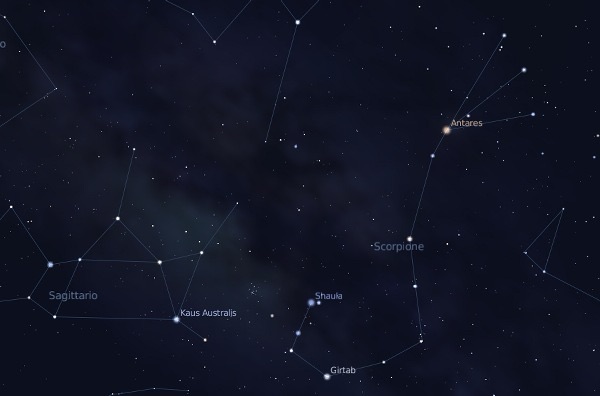
While the stories of Bodu Niyami are wrapped in folklore, they are rooted in a very real, highly sophisticated science developed by ancient Maldivians: the Nakatsh calendar system.
Real-life niyamis were the elite scientists of their day. They didn’t rely on luck; they memorized a complex astronomical calendar that divided the 365-day year into 27 nakaiy (stellar positions or seasons). Each nakaiy dictated exact weather trends, wind directions, and fish migrations.
A master navigator knew exactly when the monsoon winds would flip, down to the day. They memorized the exact flight patterns of seabirds like the White-tailed Tropicbird, knowing that a bird flying high at dusk was a geometric line pointing straight to dry land.
The Modern Legacy
Today, the sails have been replaced by powerful twin outboard engines, and modern Maldivians navigate the atolls with smartphones and digital charts. Yet, the spirit of Bodu Niyami lives on.
If you travel to the outer local islands of the Maldives today and speak to the older fishermen, you will still see them glance at the sky, smell the wind, or watch the tilt of a wave with a knowing look. They are the descendants of the Great Navigators, keeping alive a time when humanity didn’t just conquer the ocean, but learned to speak its language.