

By: Musa Shimaau
Musa Shimaau is a former council member of Holhudhoo, Noonu Atoll.
The written history of the Maldives dates back approximately 800 years. According to historical records, Maldivians have lost control of their sovereignty only once. This was during the period of Portuguese rule, which lasted from 1558 to 1573. Later, although the Maldives was occupied by the Hollh in 1166 AH, they were able to maintain control for only three months and 20 days.
Even after that, the Maldives continued to face the challenges of foreign powers seeking to expand their influence. In more recent history, Maldivians faced a similar threat 38 years ago, on Thursday, 3 November 1988.
The events of that day are not unfamiliar to us. Every year, as we commemorate the date as Victory Day, memories of the events and the terrifying experiences of that day are recalled among us.
The killing of 19 innocent Maldivians by foreign mercenaries, working alongside local collaborators in an attempt to overthrow the government in power, is a widely known part of the story. This time, however, we will look at some of the lesser-known or less frequently discussed accounts connected to 3 November.
An introduction to Luthufee
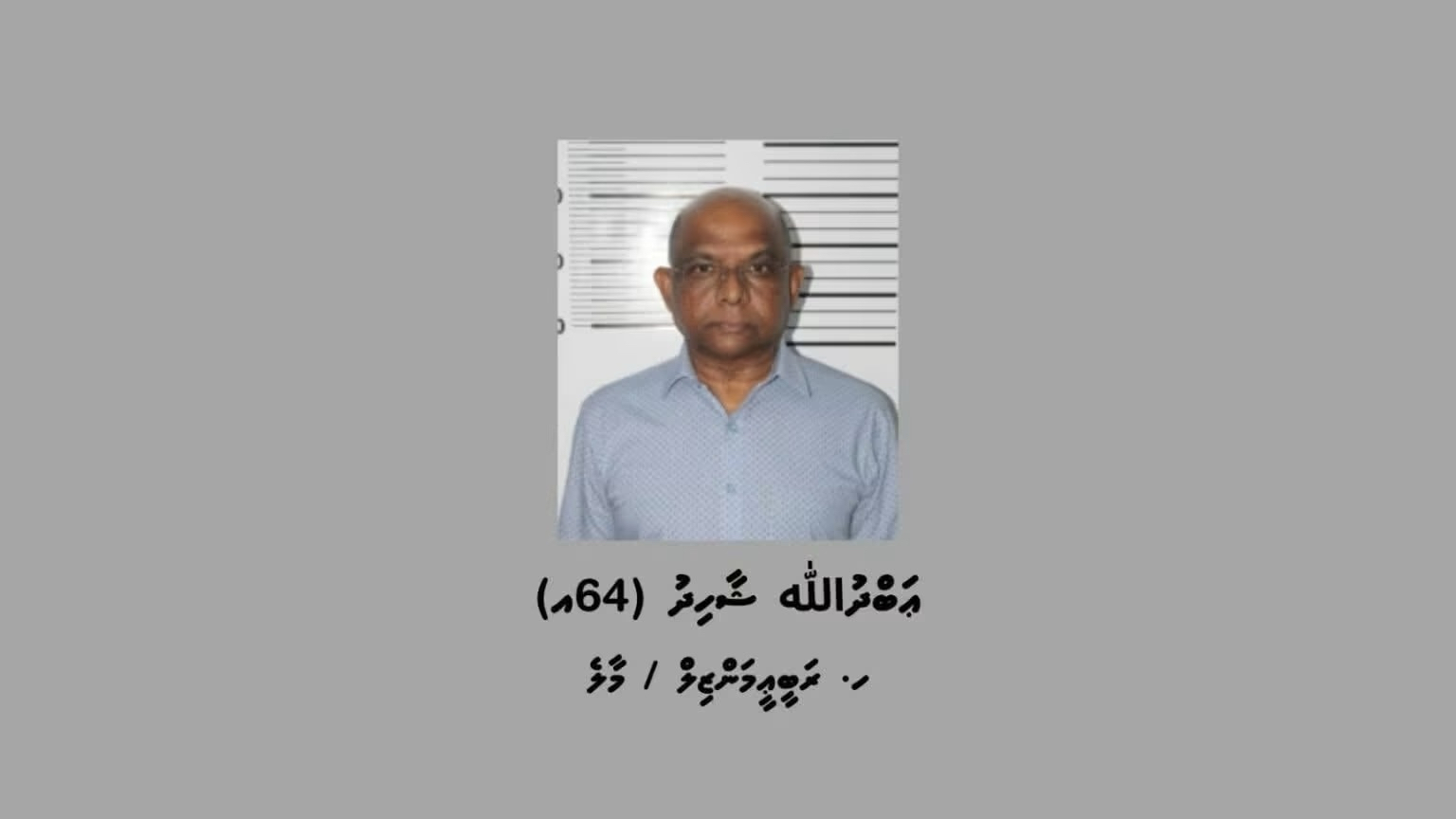
Abdullah Luthufee was the eldest son of Al-Ustaz Mohamed Ibrahim Luthufee, son of Sheikh Ibrahim Luthufee, known as Addu Thuththeedhee, of Hithadhoo, Addu Atoll, and Aishath Fareeda (Hajaraage Sithi).
Among those who actively participated in the November 3 coup attempt and were convicted, Luthufee received the harshest sentence.
Long before the November 3 coup attempt, Luthufee had actively participated in a plot to overthrow the government in power in 1968. He was only 20 years old at the time.
Following the failure of that coup attempt, he confessed to the crime. Under Maldivian penal law, Luthufee was sentenced to 18 years in prison. He was imprisoned on 23 March 1968.
After serving four years, four months and 13 days, he was released from prison on 5 August 1972 under a presidential pardon.
However, six years later, on 17 August 1975, he was arrested again because the government considered his conduct unsuitable for release. After being held in prison for approximately a year, he was transferred to Uligan, Haa Alif Atoll, on 18 November 1976. He was subsequently brought back to Malé and imprisoned again. While in prison, his detention was later changed to house arrest.
Luthufee was finally released on 17 June 1978, at the age of 29.
From 1978 until 1986, Luthufee was involved in business and various other activities both in the Maldives and abroad. However, he was later placed under house arrest again after reportedly violating regulations in connection with his business activities.
How Luthufee came into contact with PLOTE
After his house arrest was lifted, Luthufee decided to travel to Sri Lanka. On 29 October 1986, he left for Sri Lanka with his wife and child.
Upon arriving there, he partnered with a Sri Lankan man and began working in the business of trading birds and preparing dried fish.
During this period, Luthufee regularly visited a hotel near Bambalapitiya and Kollupitiya to have tea. It was there that he became acquainted with a Tamil man named Rudra.
Towards the end of 1987, Luthufee met Rudra again at the same tea hotel. On this occasion, Rudra told him that the leader of PLOTE wanted to meet him. Luthufee agreed, and they arranged to meet the following day.
The next day, Luthufee went to the PLOTE office in the area at the agreed time. He was welcomed by Rudra, whom he had met previously. Also present was Vasanthi, the commander of PLOTE’s operations in that area.
Vasanthi was among those who later actively participated in the November 3 coup attempt.
The meeting concluded with an agreement for Luthufee to meet Uma Maheswaran, the leader of PLOTE, at a later date.
Towards the end of 1987, Vasanthi contacted Luthufee by telephone and asked him to come to the hotel where they were staying to meet Maheswaran.
The main topics discussed during this meeting were the Maldives’ natural beauty and the various business opportunities available in the country.
When PLOTE asked whether a container of weapons could be brought into the Maldives by sea, Luthufee reportedly said that doing so would be extremely difficult.
They then discussed PLOTE’s future and agreed to meet again to continue their discussions.
The second meeting between Luthufee and Maheswaran took place in February 1988. At this point, the two began formal discussions about working together to overthrow the Maldivian government and change the country’s leadership.
They reached an agreement that, if PLOTE helped Luthufee overthrow the government and take power, he would provide the group with three things in return.
These were:
1. An uninhabited island in the Maldives where PLOTE members could conduct training.
2. Assistance in procuring weapons for PLOTE and facilitating their entry into the Maldives through Luthufee’s government.
3. A Maldivian resort to strengthen PLOTE’s financial resources.
In preparation for the planned attack, Luthufee began gathering various important details. He sought information about the security forces, including their internal structure, the number of personnel and the locations where they were stationed.
According to the account, Luthufee received assistance from several Maldivians in this effort. Among them were individuals who held senior positions within the security forces.
Meanwhile, Maheswaran focused on completing the preparations required for the attack.
As part of these preparations, a PLOTE member was sent to the Maldives in March 1988 to gather intelligence. Later, in July of the same year, Vasanthi also travelled to Malé. Her task was to identify the different weapons used by the Maldivian security forces.
Luthufee and his associates initially planned to arrive in Malé on 26 July 1988. However, the plan failed because they were unable to secure a boat to transport them to the Maldives.
On 29 October 1988, Maheswaran, Luthufee and Vasanthi, along with the leaders of the other groups scheduled to arrive in Malé, held a meeting.
During the meeting, they examined maps of Malé, maps of the security forces’ camp and other photographs and materials. Vasanthi was appointed as the chief commander of the attack.
They also finalised the weapons they intended to bring to Malé. These included AK-47 rifles, G3 rifles, T56 rifles, RPG-7 launchers, mortars, dynamite, LMG machine guns, pistols and knives.
The Journey to the Maldives
All the weapons intended for the attack were loaded onto the boats and concealed inside rubber sacks. Two fishing boats were arranged for the journey to Malé: the T52 and the Southwest 37. The Southwest 37 was a boat that had been hijacked at sea.
In addition to Luthufee and Nasir, 80 members of the PLOTE group were involved in the attack on Malé. Luthufee and his group departed from Mullikulam, Sri Lanka, at around 8:30 p.m. on 29 October 1988. The following day, 30 October, they hijacked another fishing boat at sea. Five Sri Lankan fishermen were also on board.
They then set course for the Maldives at around 10:30 that day. By sunset, they had reached the waters near Suthukuli in southern India. They continued their journey by following a chart drawn by Maheswaran.
By the morning of the following day, 1 November, Luthufee and his group realised that something was wrong. They had been travelling in entirely the wrong direction. At around 11 p.m. that night, they corrected their course and resumed the journey.
By Wednesday, 2 November, they had run out of almost all their food, with nothing left on board except a small amount of biscuits. Their drinking water had also run out. Nevertheless, by sunset, they had reached a point from which the islands along the eastern side of Haa Dhaalu Atoll were visible.
At this point, they began taking the weapons stored in the holds of the two boats. The group leaders also began briefing their respective teams on where they were to go and what they were expected to do after landing in Malé.
At around 1:20 a.m. on 3 November 1988, the lights of Malé came into view. All members of the group were wearing uniforms consisting of black-and-green checked shirts and blue jeans. They were then handed their weapons and lined up at the front of the boat.
The T52, which was carrying Luthufee, entered Malé at approximately 3:30 a.m.
This was when the fighting began. The Maldivian security forces immediately began returning fire. Intense exchanges of fire continued between the two sides until the evening.
At around 10 a.m. that day, the Maldivian Government requested assistance from the Indian Government.
At approximately 5:30 p.m., the attackers spotted an aircraft flying over Malé and were thrown into panic. At around 9:30 p.m. that night, the first two Indian aircraft sent to assist the Maldives landed at Hulhulé Airport.
Meanwhile, Luthufee and his associates split into groups and began boarding the Progress Light in an attempt to escape.
At around 11 p.m., as the boat was leaving the waters off Gaadhoo, it came under attack from Indian forces.
At 7:45 a.m. the following day, 4 November 1988, the Voice of Maldives resumed broadcasting.
The first programme broadcast was Surah An-Nasr from the Holy Quran. This was followed by an address to the nation by then-President Maumoon Abdul Gayoom.
The Capture of the Attackers
As soon as Indian forces arrived in the Maldives, efforts began to capture the attackers.
By then, Luthufee and a group of his Tamil associates, along with several Maldivians they had taken hostage, had fled aboard the Progress Light. On 4 November, the boat was heading directly towards Sri Lanka.
The following day, the group noticed something approaching from behind. Shortly afterwards, an Indian military helicopter began circling near their boat. The vessel approaching from behind was an Indian warship.
It was now 11 a.m. on 5 November. The Indian warship and Luthufee’s boat were in contact through radio communication. Luthufee’s group warned that if the warship came any closer, they would kill one of the hostages.
At around 8 p.m. that night, the warship began firing at the boat.
The attacks intensified considerably during the morning of 6 November. Parts of the boat began to sustain damage, and a fire broke out at the front.
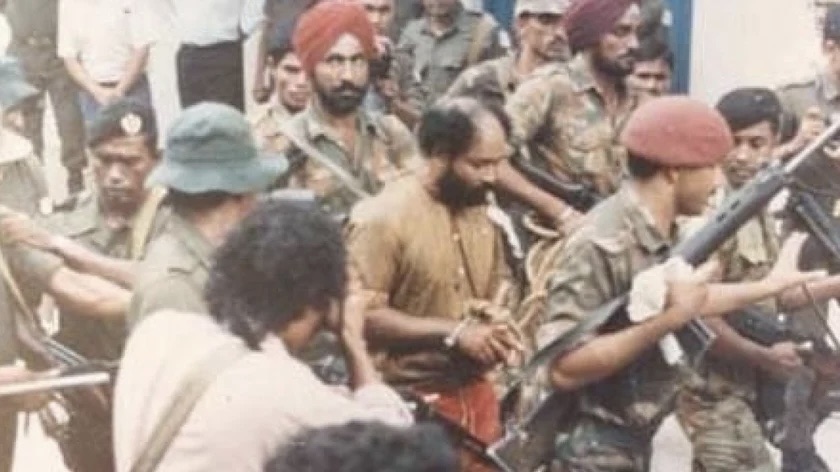
Shortly afterwards, the Tamil members of the group came out onto the deck, raised their hands and began waving towards the warship to signal their surrender.
The warship then moved to within approximately half a mile of the boat and ordered everyone to jump into the sea.
Among those on board, the Maldivians who had been taken hostage and were in poor health were immediately transported by Indian military helicopter to Trivandrum. The remaining Maldivians and the Tamil members of the group were taken to Malé aboard the warship.
The Trials
A committee was established to conduct the necessary investigations and prepare for the trials of those arrested in connection with the attempted coup.
The trials of those accused of involvement in the coup attempt began at the High Court of the Maldives on 16 March 1989.
The foreign terrorists were brought into court with their faces covered and their hands cuffed. The Maldivians, however, were brought in without their faces being covered.
The proceedings were conducted by a three-judge bench comprising the Chief Justice of the High Court and two other judges.
The trials were concluded on 12 August 1989.
The death penalty was initially imposed on four Maldivians and 12 foreigners. However, the sentences were later commuted to life imprisonment.
Conclusion
This has been a brief account of some of the events connected to the attempted coup of 3 November 1988. However, these are stories that are rarely discussed among us. Even when they are mentioned, they are often only touched upon briefly.
It is with the intention of bringing these stories back into public memory, and revisiting them in greater detail, that I have presented them to readers.
My prayer is that we never have to witness another frightening day like this.
Note: On 3 November 1991, the President’s Office published a book titled The Coup Attempt of 3 November, containing the information collected up to that point. The information used in this article has been taken from that book.