

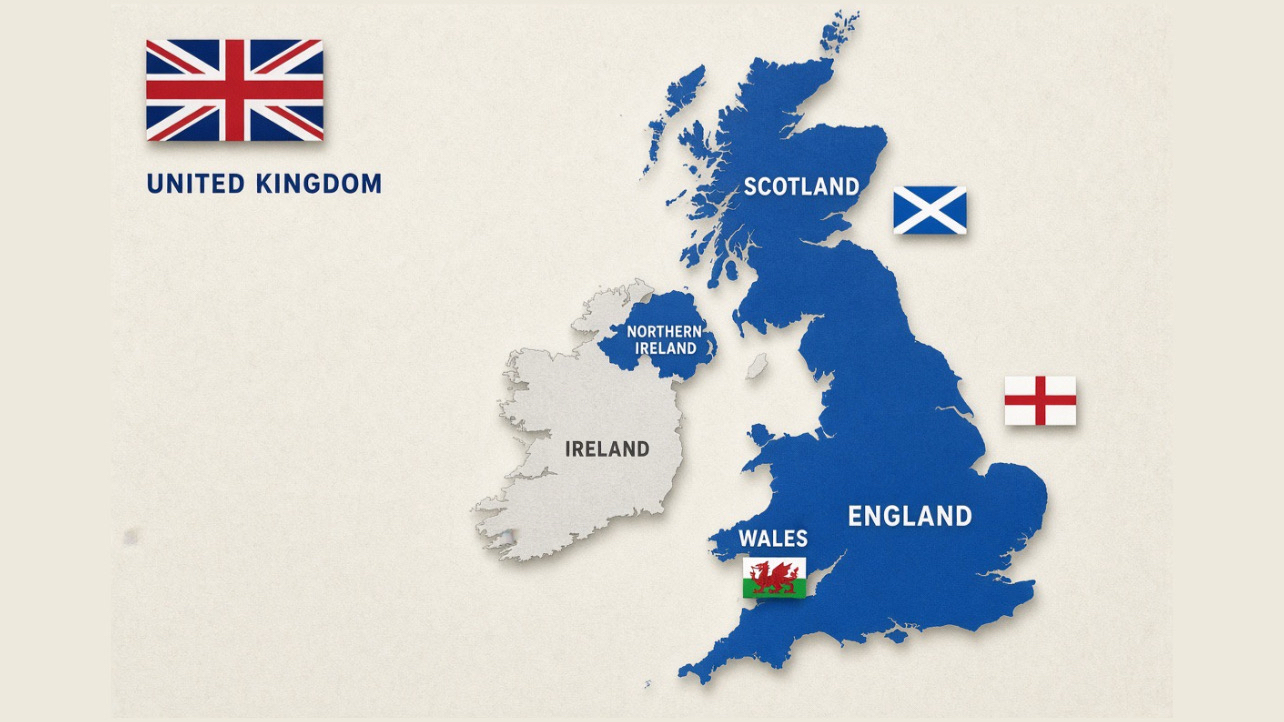
The leaders of Scotland, Wales and Northern Ireland have signed a joint agreement calling for their nations to have the right to determine their own constitutional futures, in an unprecedented challenge to the United Kingdom’s political union.
Scottish First Minister and Scottish National Party (SNP) leader John Swinney, Welsh First Minister and Plaid Cymru leader Rhun ap Iorwerth, and Northern Ireland First Minister and Sinn Féin vice-president Michelle O’Neill signed the memorandum of understanding during a meeting in Cardiff today.
Sinn Féin president Mary Lou McDonald also attended the meeting.
The three leaders met as party leaders rather than in an official intergovernmental meeting. The agreement calls on the British Government to “prepare for, plan and facilitate constitutional change” and recognizes what the parties describe as the right of Scotland, Wales and Northern Ireland to determine their own futures.
“Our nations have the right to self-determination,” the declaration says, arguing that no Westminster government should be able to block democratic decisions about the future of the three nations.
The document also declares that “Westminster’s time is coming to an end.” The leaders presented the agreement as a response to what they see as an increasingly centralized political system in London and as a demand for democratic processes on independence and constitutional change.
Three nations, three different paths
Although the three parties have united around self-determination, their constitutional objectives are not identical.
The SNP seeks Scottish independence and another referendum on leaving the United Kingdom. Swinney has said he wants a referendum within the next five years.
Plaid Cymru supports Welsh independence, while Sinn Féin seeks the reunification of Ireland, which would see Northern Ireland leave the United Kingdom and join the Republic of Ireland.
The agreement also envisages cooperation between the three movements on areas including the economy, energy, Europe and international relations. Scotland and Wales could seek membership of the European Union as independent states, while Northern Ireland’s future would be tied to the question of Irish reunification.
The meeting is particularly significant because it is the first time since the establishment of devolved government that Scotland, Wales and Northern Ireland have simultaneously had First Ministers from parties committed to independence or Irish reunification.
No immediate breakup of the UK
The agreement does not itself make any of the three nations independent, nor does it dissolve the United Kingdom.
Instead, it is a political declaration intended to increase pressure on Westminster to allow the respective populations to decide their constitutional futures through democratic processes.
The Scottish independence question remains particularly contentious, following the 2014 referendum in which voters rejected independence. The UK Government has also opposed another Scottish independence referendum without its consent. Northern Ireland has a separate constitutional framework under the 1998 Good Friday Agreement, which provides for a future border poll under certain circumstances.
The three leaders therefore face substantial political and constitutional obstacles before any of their independence ambitions could become reality.
Trump backs Irish reunification
The Cardiff agreement also comes just one day after US President Donald Trump reiterated his support for Irish reunification during a visit to Ireland.
Trump said he would “love” to see Ireland become united sooner rather than later, while declining to discuss Scottish independence at this stage. His comments prompted criticism from pro-union politicians in Northern Ireland and Britain.
The developments have consequently placed the future of the United Kingdom at the centre of political attention, with nationalist movements in all three devolved nations now openly coordinating their demands for constitutional change.
For the first time, the leaders of Scotland, Wales and Northern Ireland have formally joined together to tell Westminster that the question of whether their nations remain within the United Kingdom should ultimately be decided by their own people.