

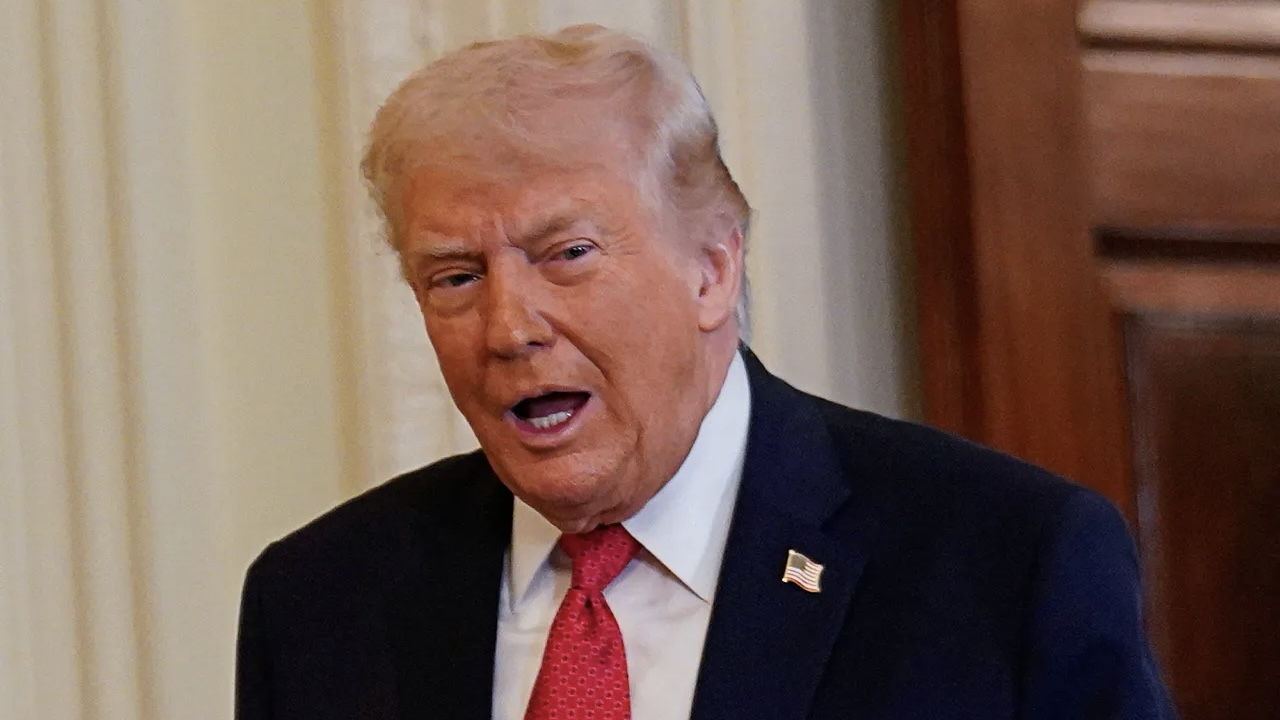
A newly reached agreement with Iran demonstrates the weakened state of the country’s military, according to U.S. President Donald Trump.
Speaking to reporters, Trump said he rejects the idea that the agreement places any limitations on U.S. power. He argued that the three-month conflict had significantly reduced Iran’s military capabilities and that Tehran entered negotiations from a position of weakness.
Trump stated that the United States agreed to the deal primarily to prevent a wider global economic crisis. Although the agreement does not include several demands Washington had previously insisted upon—such as a complete halt to Iran’s nuclear enrichment activities—he described it as a major concession by Tehran. In his view, Iran accepted the arrangement without securing many conditions of its own, which he said reflected the impact of the recent conflict on the country’s military position.
Highlighting U.S. control over maritime security in the region, Trump said American forces had established effective control of the surrounding waters, preventing vessels from freely entering or leaving Iranian ports. He claimed that further military pressure could have been applied for several more weeks, but warned that doing so could have severely disrupted global oil markets and pushed the world economy into instability.
Iran’s Supreme Leader, Mojtaba Khamenei, reportedly responded by saying that engaging in negotiations with the United States should not be viewed as accepting an adversary’s agenda.
Questions have also been raised about the future of the agreement after U.S. Vice President J. D. Vance canceled a planned visit to Switzerland, leading some observers to speculate about possible developments behind the scenes.
Following a three-month closure, the Strait of Hormuz has now reopened. According to U.S. officials, restrictions affecting Iranian ports have been lifted, allowing maritime traffic to resume. Vance said that on Wednesday night alone, approximately 12.5 million barrels of oil passed through the waterway.
Under the newly signed memorandum of understanding, Iran has reportedly pledged not to pursue the development of nuclear weapons. In return, the United States has agreed to ease sanctions on Iran’s oil sector and support the creation of a $300 billion reconstruction fund aimed at rebuilding the country. The agreement also provides international inspectors with access to Iranian nuclear facilities to verify compliance with its terms.
The deal is being presented by Washington as a step toward regional stability, though its long-term effectiveness and political implications remain subjects of debate.