
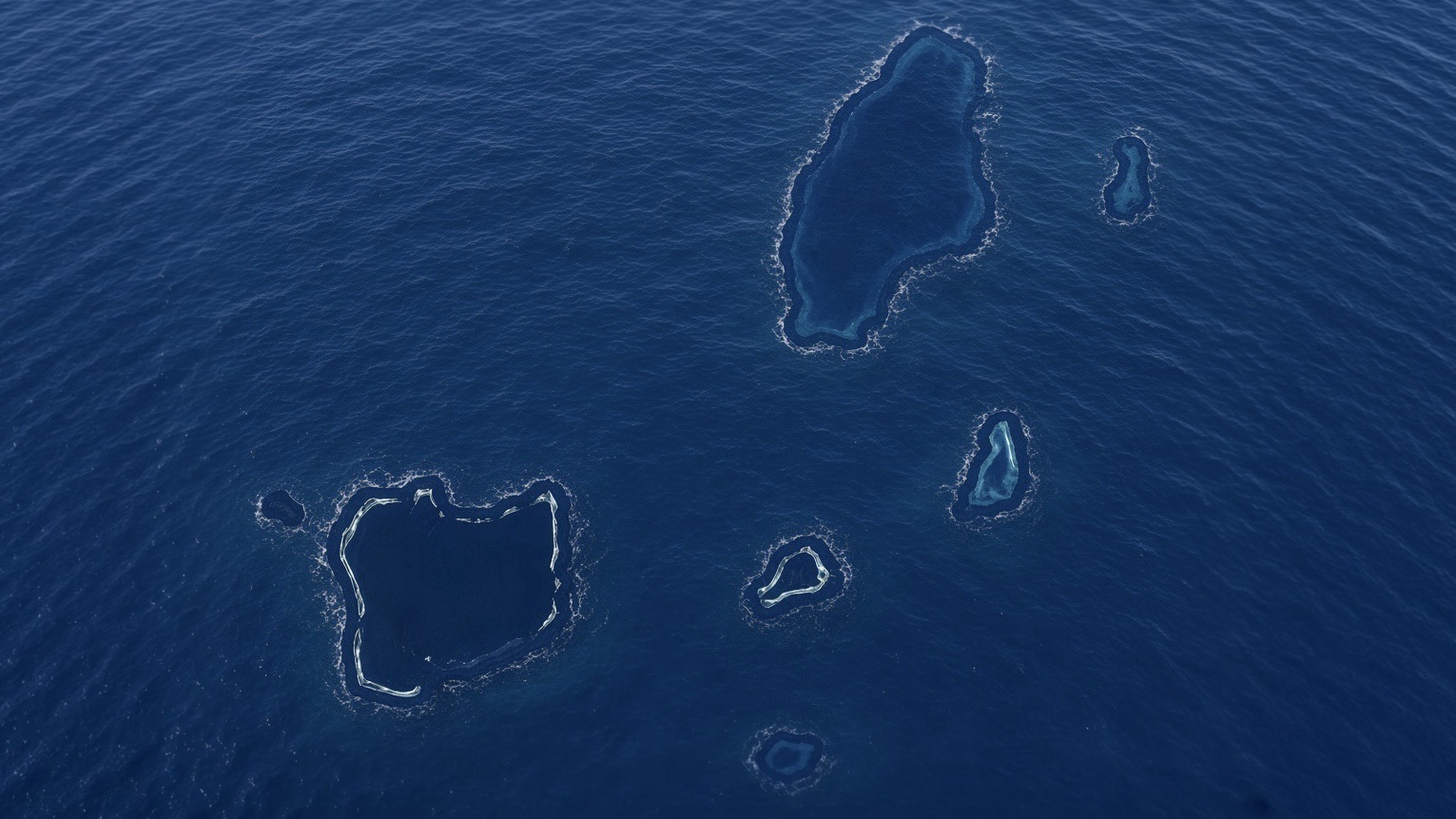
The Maldives maintains that the islands now internationally known as the Chagos Archipelago have historical connections to the Maldivian state and were traditionally known to Maldivians as Foalhavahi, a name that predates the establishment of European colonial administrations in the region.
The historical connection has become an important part of the Maldives’ position on the future of the islands, particularly following renewed debate over their sovereignty and the United Kingdom’s decision to transfer sovereignty of the archipelago to Mauritius.
Foalhavahi in Maldivian historical records
Maldivian historical accounts and research point to references to Foalhavahi in early records, including a 16th-century royal document in which a Maldivian ruler asserted authority over a group of islands identified in the document as the seven islands of Pullobay.
The document is cited as an important part of the historical argument connecting Foalhavahi to the Maldives. Former President Mohamed Nasheed also referred to historical maps from the 1500s, which he said depicted an island group south of Addu Atoll as Foalhavahi.
In October 2022, Nasheed argued that historical and cultural evidence supported the Maldives’ claim over Peros Banhos, an atoll within the present-day Chagos Archipelago, which he identified with Foalhavahi.
The identification of historical place names with the modern islands, however, remains a subject of historical discussion. Researchers have also examined European maps containing names such as Polvera, Polverera and Polvoreira, proposing that these may preserve earlier versions of the Maldivian name Foalhavahi. This interpretation is advanced by the Maldivian research initiative Maldivians for Chagos, although the proposed geographical and linguistic connections require further independent historical verification.
Historical accounts of southern Maldivian maritime traditions also refer to islands and island groups south and southwest of the Maldives. Spanish historian Xavier Romero-Frias records the names Hoḷḷavai and Fōḷavahi as terms used by southern and northern Maldivians respectively. He notes that these names were sometimes used broadly for distant island groups.
Why the Maldives uses the name Foalhavahi
The Maldives’ position places importance on the name Foalhavahi as part of its historical identity and maritime heritage.
The name Chagos, meanwhile, belongs to the European geographical naming tradition. The archipelago appeared on Portuguese maps during the 16th century, and the name is commonly associated with the Portuguese word chagas, meaning wounds, although the precise origin of the name is not conclusively established.
Maldivian researchers and advocates argue that the widespread adoption of European geographical names obscured earlier indigenous names and maritime knowledge. From this perspective, referring to the islands as Foalhavahi restores recognition to the name preserved in Maldivian historical accounts.
The Maldives has increasingly used both names in official communications. In his February 2026 presidential address, President Mohamed Muizzu referred to the islands as the Chagos Archipelago (Foalhavahi). The President’s Office also cited historical and anecdotal evidence of longstanding connections between the Maldives and Foalhavahi, including a 16th-century royal decree asserting sovereignty over the archipelago.
While the Maldives’ position treats Chagos as a name associated with European mapping and colonial-era geography, it is worth distinguishing the name’s European origins from the later British colonial administration. The name appeared in European cartography centuries before Britain established the British Indian Ocean Territory in 1965.
The origin of the Chagossian people
The history of the Chagossian people is closely connected to the French colonial plantation system.
Although European navigators had mapped the islands centuries earlier, the Chagos Archipelago remained largely uninhabited until permanent settlement began in the 18th century. French plantation operators established coconut plantations on islands including Diego Garcia, Peros Banhos and the Salomon Islands.
In 1783, enslaved Africans were brought to Diego Garcia by Franco-Mauritian plantation operators. More enslaved people were subsequently transported from Africa and Madagascar to work on the expanding plantations. Following the abolition of slavery, indentured labourers from India also arrived, alongside workers and settlers from Mauritius and other parts of the region.
Over generations, the descendants of these workers formed a distinct island community, developing their own cultural traditions, way of life and French-influenced Creole language.
The community became known as the Chagossians. They were also historically referred to as Ilois, derived from the French word îlois, meaning islanders. The term was used for people from the islands, although it did not always have a precise definition and later acquired negative connotations for some members of the community. The name Chagossian became increasingly established as a way of identifying the people with their homeland.
Their history, therefore, is rooted in colonial-era settlement, forced labour and the development of a permanent population across the islands.
Colonial separation and the displacement of the Chagossians
Following the Napoleonic Wars, France ceded Mauritius and its dependencies, including the Chagos Archipelago, to Britain under the Treaty of Paris in 1814. The islands were subsequently administered as part of the British colony of Mauritius.
In 1965, Britain detached the Chagos Archipelago from Mauritius and established the British Indian Ocean Territory. The separation took place ahead of Mauritius gaining independence in 1968.
Between 1967 and 1973, the Chagossian population was forcibly removed from the islands and relocated primarily to Mauritius and Seychelles to make way for the establishment of a US military facility on Diego Garcia.
The displacement separated the community from its ancestral homes and remains one of the most significant human rights issues associated with the archipelago.
The Maldives’ position
The Maldives’ historical connection to Foalhavahi has become increasingly prominent in its diplomatic position on the Chagos issue.
In February 2026, President Muizzu announced that the Government of Maldives had withdrawn a letter issued by the previous administration in August 2022 concerning the country’s position on the Chagos dispute. The government stated that the earlier change in policy had adversely affected Maldivian interests and called for an investigation into the matter.
The President’s Office also highlighted historical and anecdotal evidence of connections between the Maldives and Foalhavahi, including the 16th-century royal document and longstanding maritime interactions.
For the Maldives, Foalhavahi represents more than an alternative name for a distant group of islands. It is part of a wider historical discussion about Maldivian maritime identity, historical boundaries and the effects of European colonial mapping on the way the Indian Ocean has been geographically understood.
The history of the Chagossian people and the Maldives’ historical claim are separate but intersecting aspects of the archipelago’s past: one concerns the community formed under colonial plantation rule and later forcibly displaced, while the other concerns the Maldives’ claimed historical relationship with the islands.