
23 November 2026 | Gaza, Palestine
Israeli forces continued attacks across the Gaza Strip on Monday, killing Palestinians in drone strikes and airstrikes while carrying out further demolitions of residential buildings and opening fire in several areas despite the ongoing ceasefire agreement.
The day also saw renewed warnings over the humanitarian and environmental consequences of the war, including a new report identifying widespread toxic contamination across Gaza and the death of a child from acute lead poisoning.
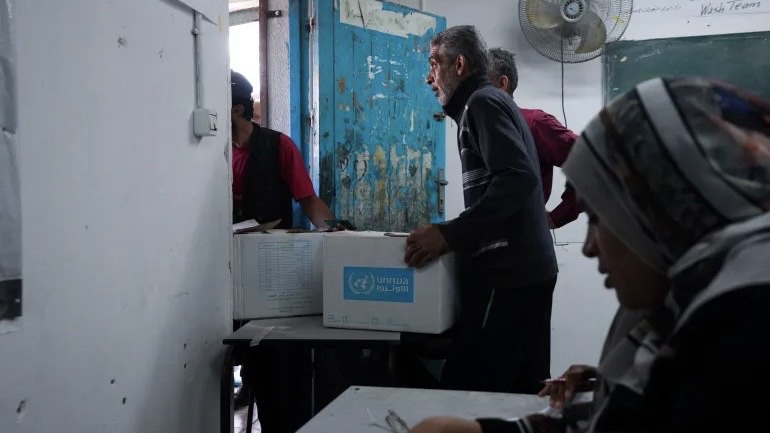
Israeli drone strike kills UNRWA employee in Jabalia refugee camp
An Israeli drone strike killed a Palestinian employee of the United Nations Relief and Works Agency for Palestine Refugees (UNRWA) while he was carrying out his duties near a water well in Jabalia refugee camp in the northern Gaza Strip.
The victim was identified as Adel Sami al-Helou. According to UNRWA and local medical sources, the strike hit an area near the water well where agency personnel and a security guard were working. Three other people were wounded in the attack.
UNRWA said the employee had been engaged in his regular duties associated with the operation of the water well, which supplied water to residents in the area.
Reuters reported that the Israeli military said it was checking the incident following a request for comment.
The killing raised further concerns over the safety of humanitarian personnel and the continued targeting of essential civilian infrastructure, particularly facilities providing water to displaced Palestinians and residents in northern Gaza.
Israeli airstrike kills two Palestinians in western Gaza City
Two Palestinians were killed and several others injured when Israeli warplanes targeted a civilian vehicle in the Al-Katiba area, west of Gaza City.
The attack occurred on Monday afternoon, with local sources reporting that the vehicle was directly struck by an Israeli airstrike.
The incident was among several attacks reported across the Gaza Strip throughout the day, as Israeli forces continued conducting aerial operations despite the ceasefire agreement.
Israeli drone strike kills Palestinian in Al-Karama neighbourhood of Gaza City
An Israeli drone strike killed a Palestinian and injured several others in the vicinity of Al-Andalus Tower in the Al-Karama neighbourhood, northwest of Gaza City.
The attack took place on Monday night, according to a WAFA correspondent, who reported that the drone targeted the area surrounding the tower.
Medical sources confirmed the fatality and reported that several other Palestinians sustained injuries.
Separately, two Palestinians were injured by Israeli military gunfire west of Beit Lahia in northern Gaza, while Israeli tanks continued firing towards areas west of the town.
Israeli forces continue ceasefire violations with heavy gunfire and residential demolitions
Israeli forces continued opening fire across several areas of the Gaza Strip on Monday, while carrying out controlled demolitions of residential buildings east of Gaza City.
According to the Palestinian Information Center (PIC), the incidents included:
- Al-Mawasi, Khan Younis: A Palestinian was wounded in the foot by Israeli gunfire near the Asdaa intersection, west of Khan Younis.
- Batn al-Samin, Khan Younis: Israeli military vehicles opened heavy fire towards the area, targeting locations near Palestinian residential communities.
- Eastern Al-Maghazi: Israeli forces opened intensive machine-gun fire towards areas east of Al-Maghazi refugee camp in central Gaza.
- Eastern Gaza City: Israeli troops carried out controlled demolitions of residential buildings overnight, destroying further structures in the area.
Additional reports indicate that Israeli forces injured a woman near the entrance to Al-Bureij refugee camp, while an Israeli drone targeted the rooftop of a house belonging to the Farhat family in Al-Nuseirat refugee camp, causing material damage without reported casualties.
The incidents formed part of continued military activity across the Strip despite the ceasefire agreement that came into effect in October 2025.
Gaza death toll rises to 74,746, with 176,234 injured since October 2023
The Palestinian Ministry of Health in Gaza reported that the cumulative death toll from Israel’s military campaign since 7 October 2023 had risen to 74,746 Palestinians, with another 176,234 injured.
According to medical sources, hospitals recorded four fatalities and seven injured people during the preceding 24 hours.
The ministry also reported that since the ceasefire took effect on 11 October 2025:
- 1,679 Palestinians have been killed.
- 6,100 Palestinians have been injured.
- 851 bodies have been recovered from beneath the rubble.
Medical authorities warned that additional victims remained trapped beneath destroyed buildings and in areas inaccessible to ambulance and rescue crews.
The figures reflected the situation reported on 23 November and did not include subsequent developments.
Child dies from acute lead poisoning amid unsafe battery repairs in displacement camps
A Palestinian child died in the Gaza Strip after suffering acute lead poisoning, according to the Palestinian Ministry of Health.
Medical authorities said clinical examinations, diagnostic follow-ups, epidemiological investigations and the child’s medical history confirmed signs of severe lead poisoning.
The child’s father reportedly worked repairing damaged batteries inside displacement sites and tents, exposing family members to toxic substances in poorly ventilated living conditions.
The Ministry of Health warned that the incident could indicate a wider, largely undiagnosed problem involving lead exposure among children across Gaza.
Authorities linked the risks to restrictions on the entry of new and safe batteries, which have forced residents to repair old and damaged batteries inside tents and other confined spaces.
The ministry called on the international community and the United Nations to pressure Israel to allow safe replacement batteries into Gaza. It also urged international health organisations to provide specialised equipment and supplies for testing blood lead levels, warning that undetected poisoning could result in permanent disabilities or further deaths.
Oxfam report finds potential environmental contamination across more than 99% of Gaza
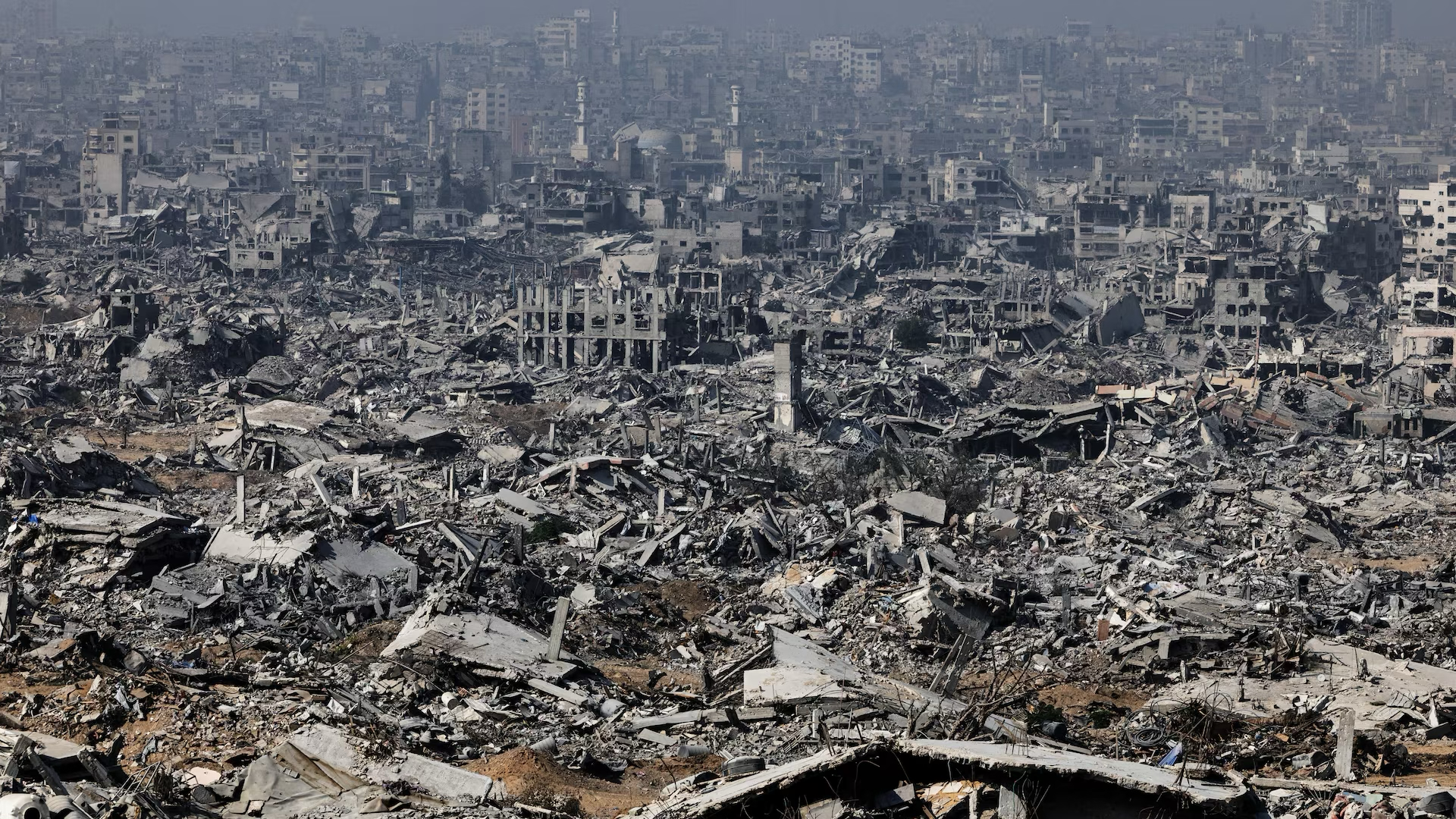
International humanitarian organisation Oxfam, together with the Conflict and Environment Observatory (CEOBS), published a new report warning that Israel’s military campaign has left widespread environmental contamination across the Gaza Strip, threatening public health and the ability of Palestinians to survive in the territory.
The report, titled Environmental War Crimes: How Israel’s Military Assault Has Turned Gaza into a Toxic Wasteland, Threatening Human Survival, found indicators of potential contamination across more than 99% of Gaza’s territory.
According to the organisations, approximately 78% of Gaza’s land area has been affected by the scale and intensity of military operations.
The report identified several sources of contamination, including heavy metals, explosive residues, asbestos released from destroyed buildings, dioxins and biological pollutants resulting from damaged sanitation infrastructure.
Among its key findings:
- Groundwater contamination: Testing conducted in July 2026 found faecal coliform bacteria in 19% of the 79 groundwater wells sampled, compared with 2% of wells reported as contaminated in 2021.
- Sewage infrastructure: Only 19% of sewage pumping stations remain operational, while approximately 30% of the wastewater network retains some operational capacity.
- Sewage entering the sea: Around 40,000 cubic metres of untreated sewage flow into the Mediterranean Sea every day, with an additional 15,000 cubic metres lost through cesspits and other leakage routes.
- Destroyed infrastructure: United Nations Environment Programme estimates indicate that the military campaign has generated more than 61 million tonnes of debris across the territory.
- Agricultural contamination: Areas around Beit Hanoun, Wadi Gaza and northeast of Khan Younis face heightened risks of long-term soil contamination, potentially affecting future agricultural production.
The report also identified Gaza City, Jabalia and northern Gaza as particularly vulnerable to air contamination from dust generated by destroyed buildings and debris.
Meanwhile, Gaza City, Khan Younis, Rafah, Jabalia and areas along Salah al-Din Road were identified as locations with particularly high indicators of potential contamination.
Oxfam warned that Palestinians were being exposed to hazardous substances through contaminated air, food, water, soil and debris, with children and pregnant women facing particularly serious health risks.
The organisations also highlighted that restrictions on the entry of testing equipment and technical specialists were preventing a comprehensive assessment of the contamination.
They called for urgent environmental testing, the removal of hazardous materials, rehabilitation of sewage infrastructure and the inclusion of environmental recovery in Gaza’s reconstruction plans.
Hamas and Palestinian factions urge mediators to prevent further Israeli escalation
Palestinian factions, led by Hamas, intensified contacts with international mediators on Monday amid growing concerns over a possible escalation of Israeli military operations in the Gaza Strip.
According to a report by Al-Quds Al-Arabi, cited by Israel Hayom, Palestinian factions urged mediators to pressure Israel to halt its continued military activity and adhere to the existing ceasefire arrangements.
A Palestinian source said the factions were increasingly concerned about the movement of Israeli forces near the so-called Yellow Line, particularly amid fears of additional ground operations.
The discussions reportedly involved the technocratic committee established to administer Gaza under the proposed post-war arrangements. The factions sought to have the committee communicate their concerns to the Board of Peace’s representative, Nickolay Mladenov, and encourage further US pressure on Israel.
The source also claimed that Palestinian factions were concerned about armed groups operating in several parts of Gaza and alleged that some were cooperating with Israel and preparing to conduct raids.
The factions called for intervention to ensure Israel implemented the first phase of the ceasefire agreement, while reiterating their stated commitment to both phases of the arrangement.
However, the Palestinian source described the responses received from mediators as insufficient and said the factions remained concerned about further escalation in the coming days.