

14 November 2026 | Palestine
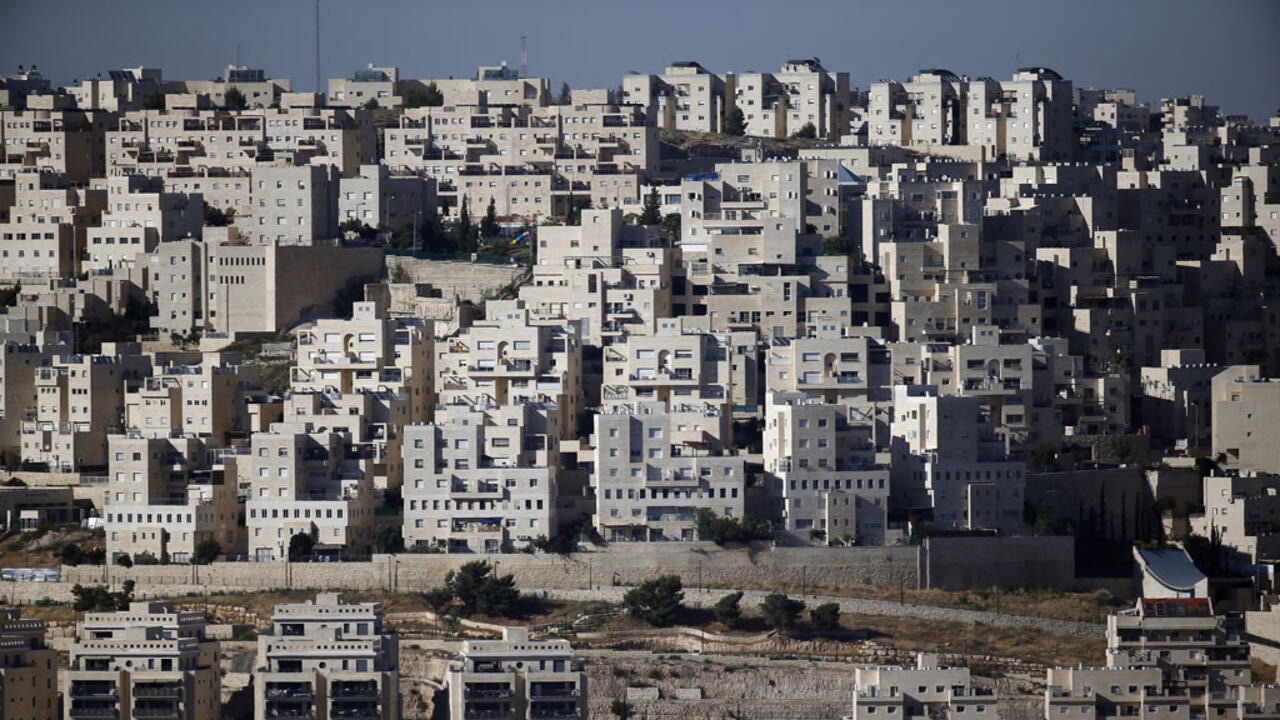
Israeli authorities have advanced 11 settlement expansion plans across the occupied West Bank, including the construction of 895 additional housing units, alongside new industrial, commercial and service facilities, according to a report by the Palestinian Wall and Settlement Resistance Commission.
The plans cover several governorates, including Qalqilya, Salfit, Nablus, Ramallah and Al-Bireh, and Hebron, as well as areas under the Gush Etzion Regional Council in the southern West Bank.
In its weekly report published on Saturday, 14 November, the commission said the proposals involve three interconnected forms of settlement expansion: increasing residential construction, converting agricultural land and open spaces into urban and industrial areas, and developing infrastructure and services to support the growing settlements.
The commission warned that the combined developments would increase pressure on Palestinian land, restrict the expansion of Palestinian communities and further fragment the geographical continuity between Palestinian towns and villages.
Where the 895 additional homes are planned
The largest residential expansion is planned in the Kedumim settlement, in the Qalqilya governorate, where 288 additional housing units are included in a plan covering 158.4 dunums of land.
The settlement was established on land belonging to the Palestinian village of Kafr Qaddum. The plan concerns the Tzomet Vradim residential neighbourhood and includes provisions for land use, roads and building rights.
Other major residential projects include:
- Beit Hagai, Hebron: 225 additional housing units across approximately 189.5 dunums.
- Talmon, Ramallah and Al-Bireh: 200 additional units across 65.1 dunums.
- Ariel, Salfit: 98 additional units across approximately 61.5 dunums.
- Elon Moreh, Nablus: 83 additional units across approximately 24.9 dunums.
The commission also identified a smaller residential expansion in Oranit, in the Qalqilya governorate, involving one additional housing unit.
Together, these six residential components account for the 895 additional units identified in the report.
Industrial and commercial developments also included
Beyond residential construction, the 11 plans include changes to industrial zones, commercial facilities and public infrastructure.
In the Qalqilya governorate, two industrial plots in the Karnei Shomron settlement, covering approximately 17.35 dunums, are included in plans to increase the permitted building footprint.
Another plan concerns the Oranit settlement, where an additional housing unit is proposed on a 0.552-dunum plot.
In the Salfit governorate, the plans also include changes to the Ariel settlement’s development regulations, covering a planning area of approximately 405 dunums. The changes would allow adjustments to permitted building areas and the conversion of agricultural land and open spaces for residential construction, roads and public facilities.
A separate amendment in the Beduel settlement would change building ratios and setback requirements on a 0.508-dunum plot.
In the Hebron governorate, the plans include a major industrial and commercial development in Kiryat Arba, covering approximately 165.8 dunums of agricultural land.
The project would convert the land for light industries, crafts, commercial activities and service facilities, alongside the roads and infrastructure required to support the development.
Meanwhile, in the Gush Etzion settlement council area, the regional plan would allow additional commercial and service facilities within plots designated for public institutions and open spaces.
The proposed changes include commercial and community facilities, cafés and kiosks, as well as adjustments to land classifications and the transfer of building rights between plots.
Palestinian commission warns of further fragmentation of Palestinian territory
The Palestinian Wall and Settlement Resistance Commission warned that the combined impact of the 11 plans extends beyond the construction of additional housing units.
According to the commission, the projects are designed to create an interconnected settlement system in which residential neighbourhoods are supported by industrial areas, commercial facilities, roads and public services.
It said the conversion of agricultural land and open spaces into settlement developments would reduce the land available to Palestinian communities for natural population growth and development.
The commission also warned that the expansion could further restrict the geographical connection between Palestinian towns and villages, making it increasingly difficult for communities to expand and maintain territorial continuity.
International law and settlement expansion
Israeli settlements in the occupied West Bank, including East Jerusalem, are considered illegal under international law.
United Nations Security Council Resolution 2334, adopted in December 2016, states that Israeli settlements in Palestinian territory occupied since 1967 have no legal validity and constitute a flagrant violation of international law.
The resolution also calls on Israel to immediately and completely cease all settlement activities in the occupied Palestinian territory.
In a report published on 24 June 2026, the UN Secretary-General reiterated that settlement expansion undermines the possibility of establishing an independent and geographically contiguous Palestinian state.
The latest plans add to continued concerns over Israeli settlement expansion and its impact on Palestinian land, agricultural activity and prospects for a two-state solution.
More from 14 November 2026 (Occupied West Bank, Palestine)



One thought on “Israel advances 11 settlement expansion plans adding 895 homes across occupied West Bank”