

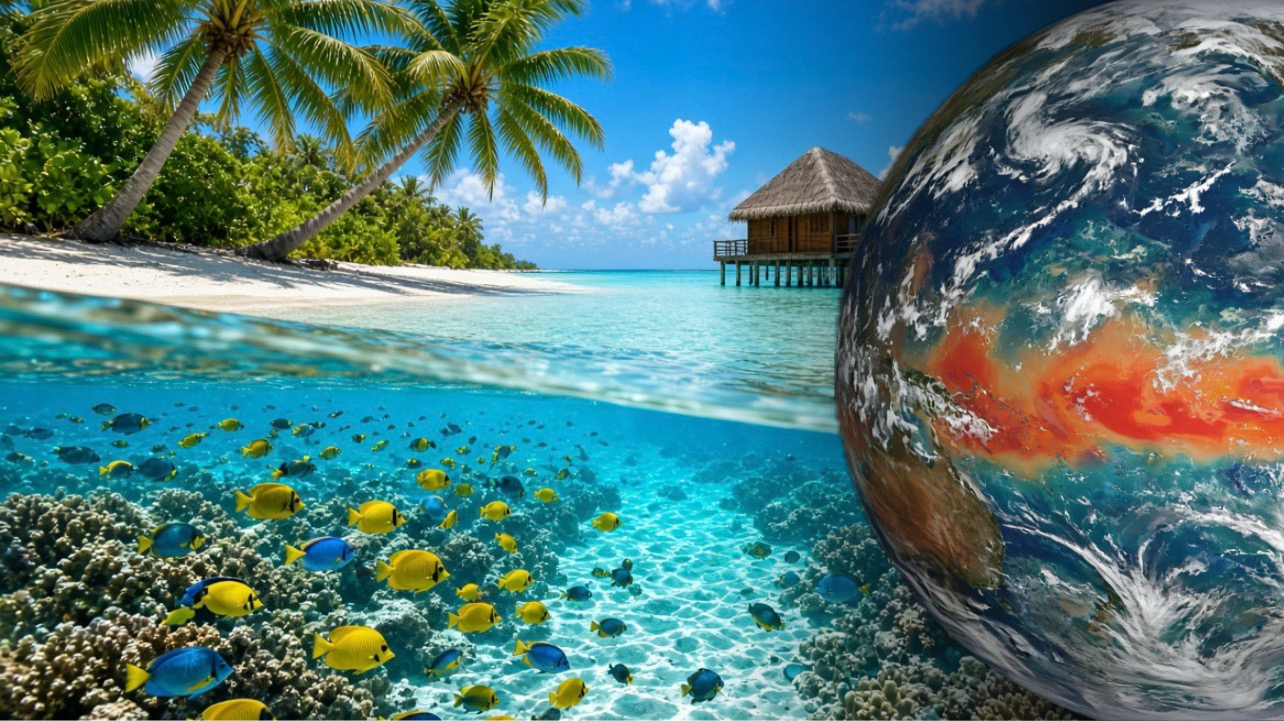
El Niño has continued to strengthen through September and into October, bringing growing concerns over extreme heat, drought, flooding and food insecurity around the world, while the Maldives prepares for potentially stronger effects later this year.
NOAA recorded a Niño 3.4 sea-surface temperature anomaly of 1.8°C in August, with parts of the eastern equatorial Pacific more than 3°C above average. NOAA also estimated a 75 percent probability that the event could exceed previous El Niño strength records during the October–December period.
The strengthening event is already placing additional pressure on vulnerable communities. The World Meteorological Organization warned that El Niño could worsen extreme heat, drought and flooding, with poorer communities facing greater risks because they have fewer resources to prepare for and recover from climate shocks.
In Somalia, 5.4 million people were projected to face crisis-level hunger or worse between October and December, including 1.5 million facing emergency-level hunger or worse. Forecast flooding could further worsen conditions in communities already struggling with food and water shortages.
Parts of southern Africa are also facing increased drought and water-stress risks, including areas of South Africa, Mozambique, Malawi and southwestern Madagascar. Farmers and rural communities that depend heavily on rainfall are particularly exposed.
In Latin America and the Caribbean, UNICEF has warned that at least 25.8 million children are exposed to El Niño-related drought and flood risks, threatening access to food, water, healthcare and education.
The effects are not the same everywhere. El Niño can alter rainfall patterns across large parts of the world, bringing prolonged dry conditions to some regions while increasing rainfall and flooding in others. Rising temperatures add another risk, particularly for children, older people and outdoor workers.
For the Maldives, the effects are expected to be more closely connected to rainfall, temperatures and the surrounding ocean.
The Maldives Meteorological Service has warned that the effects could peak around November, with reduced rainfall potentially continuing into early 2027. Above-average temperatures are also expected.
For an island nation heavily dependent on the ocean, changes in sea temperatures and weather patterns can have wider consequences. Fisheries, coral reefs, tourism and freshwater supplies can all be affected.
Changes in ocean temperatures could influence tuna distribution and fishing conditions, although the actual effect on Maldivian catches will need to be assessed through fisheries data rather than forecasts alone.
Coral reefs are another major concern. Warmer seas increase thermal stress on corals and can contribute to bleaching. This is particularly significant for the Maldives, where reefs support fisheries and tourism while helping protect islands from waves and coastal erosion.
Reduced rainfall could also put additional pressure on freshwater supplies, particularly on islands dependent on rainwater harvesting and desalination. Higher temperatures may simultaneously increase demand for drinking water and cooling.
The tourism sector could also face changes in marine conditions and weather, although the effects will vary between resorts and islands.
The coming months will therefore be important for the Maldives. Rainfall, temperatures, sea-surface temperatures, fisheries and coral-reef conditions will show how strongly the strengthening El Niño is affecting the country.
What began as an international climate warning earlier this year has now developed into an event being closely watched across the world. For the Maldives, the focus is now on how the changing Pacific conditions translate into the country’s weather, ocean, reefs and livelihoods.