

MALÉ, Maldives — The era of multi-party fragmentation in the Maldives is rapidly drawing to a close. Long a hallmark of the nation’s fragile young democracy, minor political movements face an existential crisis, squeezed out by severe legal hurdles, strict funding criteria, and a consolidating two-party standard.
For years, boutique political entities—often formed as personal vehicles for wealthy tycoons or influential political figures—exerted outsized power as crucial coalition kingmakers. However, recent structural shifts in election laws, parliamentary power dynamics, and constitutional amendments have systematically stripped small parties of their leverage, rendering their long-term survival increasingly unlikely.
The 10,000-Member Wall
The most immediate barrier facing small political parties is the stringent membership threshold required to access state funding.Under Maldivian electoral law, while a party can exist with 3,000 members, it must maintain a minimum of 10,000 registered members to qualify for state budget allocations.
For smaller outfits, crossing this “magic number” has proven almost impossible. Strict verification measures enacted by the Elections Commission (EC)—including digitized form checks and strict deregistration procedures—have drained inflated voter lists, leaving only a handful of parties qualifying for public funds.
Without state subsidies, smaller parties are forced to rely heavily on private financing, a model that has become unsustainable in the current economic climate.
End of the Coalition Era
Historically, major presidential candidates needed small parties to cross the 50% threshold in runoff elections. Minor parties traded their small block of voters for cabinet posts, ambassadorial appointments, and legislative concessions.
That dynamic fractured during recent election cycles:
- Supermajority Dominance: Major parties have shifted toward building absolute parliamentary majorities. By consolidating authority directly within the primary party apparatus, ruling governments no longer need to rely on shaky, multi-party alliances.
- Anti-Hopping Laws: Constitutional amendments restricting floor-crossing mean lawmakers can no longer jump ship to form opportunistic micro-factions without losing their seats. This has effectively locked political influence inside the dominant party structures.
Two Giants Control the Field
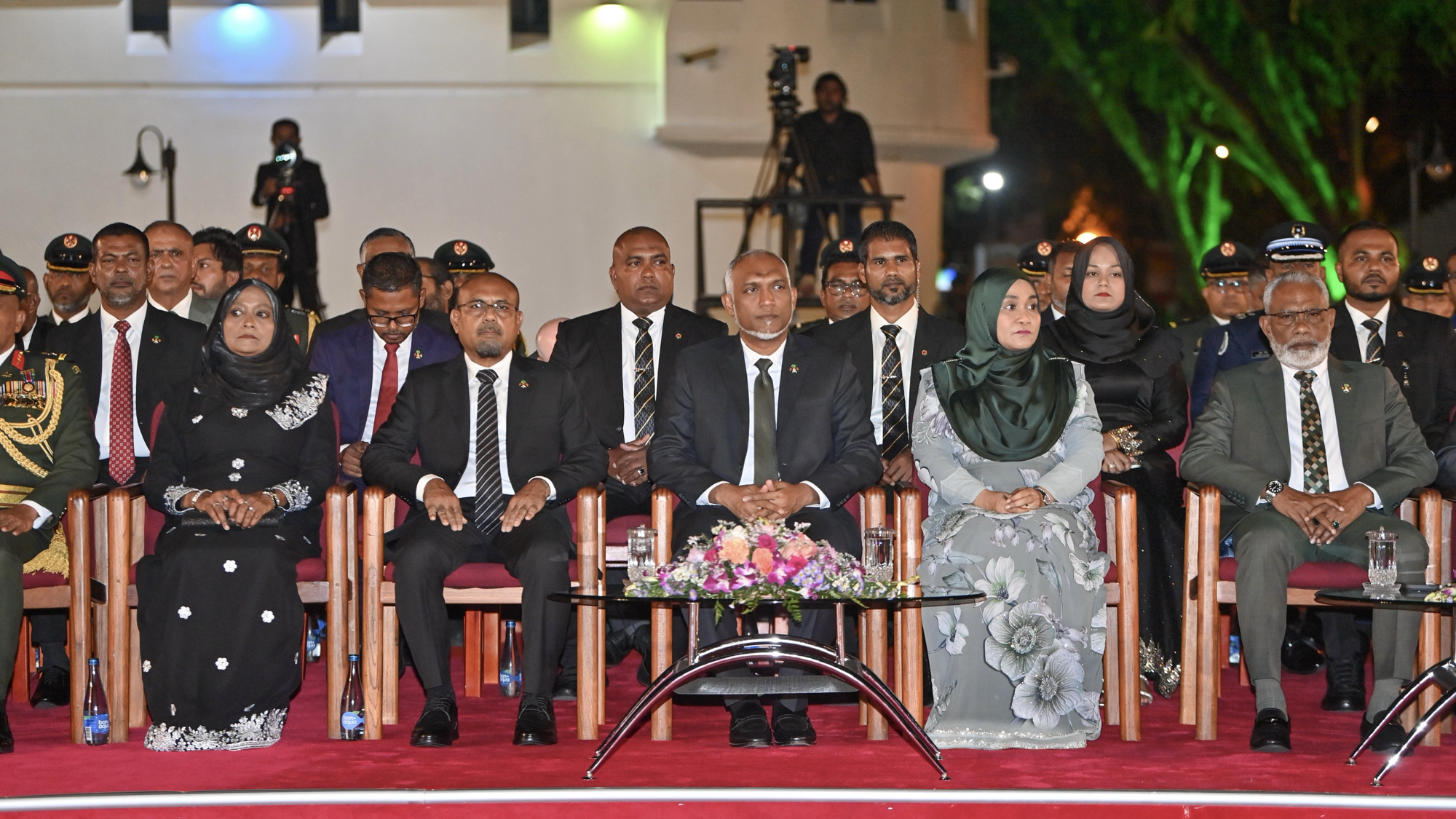
The political landscape has settled into a de facto two-party system dominated by the ruling People’s National Congress (PNC) and the main opposition Maldivian Democratic Party (MDP). Together, they command the vast majority of electorate loyalty, leaving third-party candidates struggling to remain relevant.
| State Funding | Receives majority share of statutory budget allocations | Excluded due to membership thresholds |
| Grassroots Reach | Established nationwide branches and campaign machinery | Restricted to specific islands or localized pockets |
| Electoral Strategy | Contests every seat; shapes national policy agendas | Dependent on coalition deals to stay viable |
| Legislative Leverage | High discipline, protected by anti-defection laws | Diminishing leverage in a dominant-party Majlis |
A Squeezed Future for Pluralism
Political analysts warn that while phasing out “paper parties”—entities that exist only on registration documents without active support—promotes stability, it risks stifling genuine policy diversity. Alternative political voices, environmental reform movements, and youth-led initiatives now face a near-impossible task when attempting to establish a formal national platform.
Unless small parties adapt by forming permanent ideological mergers rather than temporary election-season alliances, the Maldives’ political landscape will continue its march toward a rigid two-party duopoly.