

Saudi Arabia has once again launched its annual Hajj security readiness operations ahead of the upcoming Hajj 1447 season, with security forces conducting a large nighttime parade and preparedness display in Makkah.
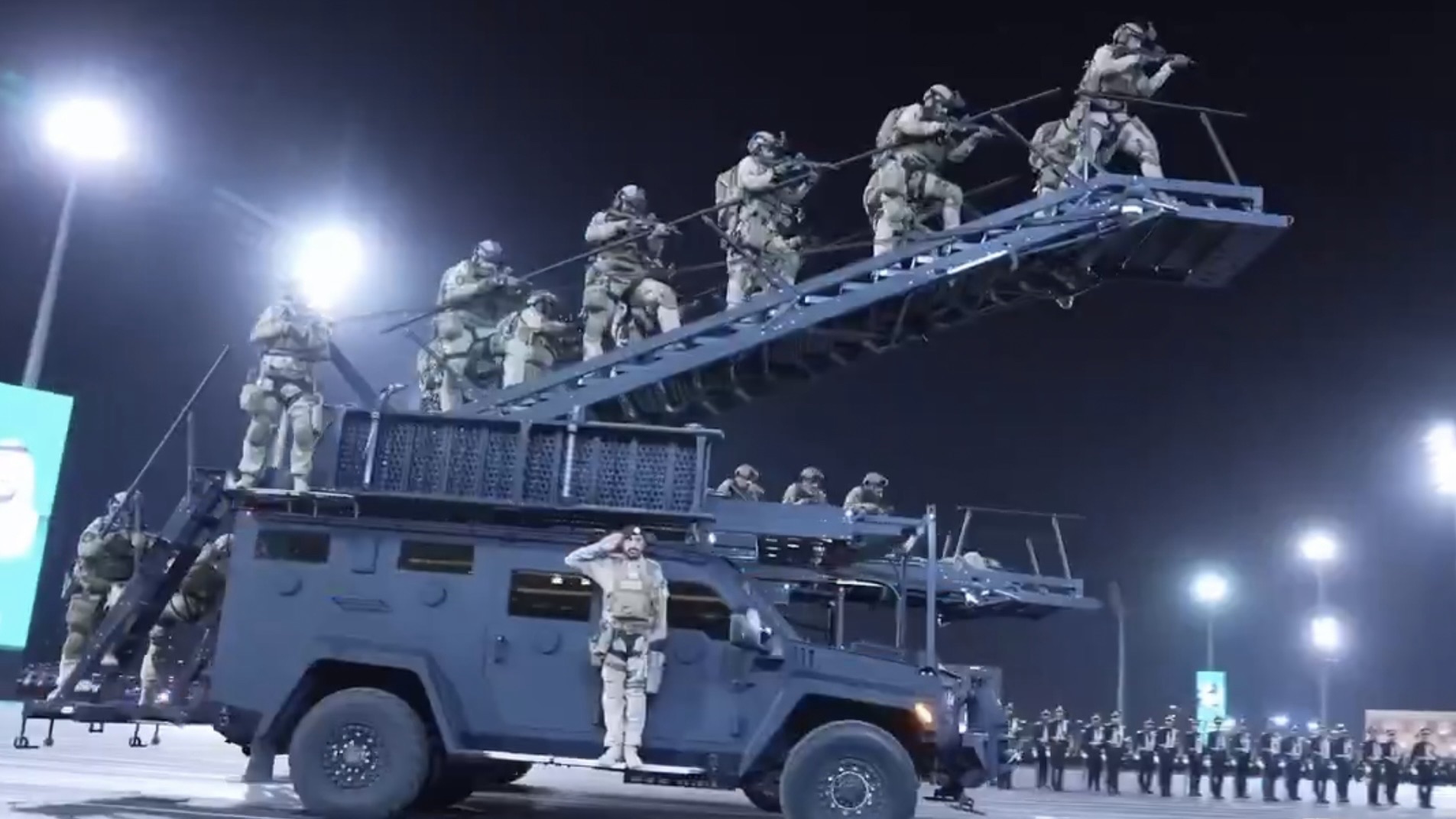
Videos shared online by The Holy Mosques showed armored tactical vehicles, heavily equipped security personnel, emergency response units, and coordinated formations moving through a floodlit parade ground as part of the Kingdom’s preparations for the annual pilgrimage.
The display highlighted the readiness of various Hajj security units tasked with protecting millions of pilgrims expected to arrive in the holy sites during the upcoming days of Dhul Hijjah.
The annual readiness parade is part of Saudi Arabia’s broader Hajj security strategy and is held every year before the start of the pilgrimage season. The exercises are designed to test coordination between multiple agencies responsible for crowd management, emergency response, traffic control, medical support, and protection of pilgrims.
Security personnel participating in the parade appeared in full tactical gear, with armored vehicles, rapid response units, and emergency equipment also showcased during the event. Flashing emergency lights, large transport vehicles, and synchronized movements were visible throughout the demonstration.
The operations are typically overseen by the Ministry of Interior and involve several specialized units, including the Special Forces for Hajj and Umrah Security, Public Security forces, Civil Defense teams, traffic police, and other emergency response agencies.
Saudi authorities conduct these preparations annually due to the massive scale of Hajj, which brings together more than a million pilgrims from around the world within a limited geographic area around Masjid Al-Haram, Mina, Arafat, and Muzdalifah.
In recent years, Saudi Arabia has also expanded its use of technology during Hajj operations, including surveillance systems, drones, biometric verification, smart crowd-monitoring systems, and upgraded communication networks to improve safety and logistical coordination.
The readiness displays are often viewed as both operational drills and public reassurance efforts, demonstrating the Kingdom’s preparations to ensure the safety and security of pilgrims during one of the world’s largest annual religious gatherings.